Monday, February 18, 2013

A Biblical Critique of Theistic Evolution - Dr. Rick Phillips


Rick Phillips is Senior Minister at Second Presbyterian Church in Greenville, SC. This message is Session 4 of 5 from Bethlehem Bible Church's Conference Series held on November 5 & 6, 2010 at Bethlehem Bible Church in West Boylston, MA.


Richard Davis Phillips became the twelfth Senior Minister of the Second Presbyterian Church of Greenville in July, 2007.


He came to faith in Jesus Christ at age 30, surrendering his life to the Savior in response to the preaching of God’s Word. He soon was leading evangelistic Bible studies at the college where he was teaching and, after a few years, received God’s call to enter the gospel ministry. He attended Westminster Theological Seminary in Philadelphia, PA and after graduation joined the pastoral staff of the church where he came to faith, Tenth Presbyterian Church of Philadelphia, PA. There, Rick was mentored by the well-known Bible teacher, Dr. James Montgomery Boice, and began his calling as a weekly preacher of God’s Word. After serving at Tenth Presbyterian from 1995-2002, Dr. Phillips accepted the call to be Senior Minister of First Presbyterian Church of Coral Springs, FL. After five years there, he moved to Greenville to serve our church in 2007.


Dr. Phillips describes his ministry as centering on three “P”s: preaching, praying, and pastoring. He is devoted to expository preaching, which is the teaching of whole books of the Bible week-by-week. His ministry is widely heard on the radio and the internet and Dr. Phillips is frequently called upon to speak at conferences on the Bible and Reformed theology. He further serves the church by authoring books, with over twenty-five currently in print. Among his many activities, he serves on the board and council of the Alliance of Confessing Evangelicals, the council of The Gospel Coalition, and the board of trustees of Westminster Theological Seminary. Together with Philip Graham Ryken, he is series coeditor of the Reformed Expository Commentary series. In addition to the Master of Divinity degree from Westminster Theological Seminary, Dr. Phillips holds degrees from Greenville Presbyterian Theological Seminary (Doctor of Divinity), the University of Pennsylvania (M.B.A.) and the University of Michigan (B.A.).


Friday, February 15, 2013

Should the Life of Charles Darwin be Celebrated? | Creation Today


Should the Life of Charles Darwin be Celebrated?

Paul Taylor and Eric Hovind discuss Darwin Day, the history of Charles Darwin’s life, and pay tribute to all the popular evolutionists for paving the way for ministries like Creation Today to exist.

Featured Resources

Thursday, February 14, 2013

Antibiblical Teachings of BioLogos - Theistic Evolution - by Ken Ham


Watch video from Ken Ham’s recent talk, where he exposes some of the antibiblical teaching of BioLogos.

Ham provides video clips where supposed Christian scholars Peter Enns, N.T. Wright, Greg Boyd and others say that we should ignore the first few chapters of Genesis in order to "reconcile faith with science." And they all claim Adam and Eve were not real people.


They obviously reject the authority of scripture, reject good science and are very dangerous to the Christian community.


Watch below or at http://www.answersingenesis.org/articles/am/v6/n4/ham-biologos-video-clip#


Tuesday, February 12, 2013

Living Fossils - Modern Mammals & Birds with Dinosaurs | Dr. Carl Werner - Creation Superconference 2012


Dr. Werner shows that many MODERN MAMMALS & MODERN BIRD FOSSILS have been found WITH DINOSAUR FOSSILS or in the same layers! We have been lied to by evolutionists who have concealed this fact in an effort to promote their false religion.

Evolution: The Grand Experiment: Vol. 2 - Living Fossils [Hardcover] - Amazon.com

Book Description

In 1938, the discovery of a large, unusual fish turned the scientific community on end. Dubbed a “living fossil”, the discovery of a coelacanth in South Africa shocked scientists around the world who thought this type of fish had died out millions of years prior during the process of evolution. Today, living fossils are organisms preserved in the fossil record that still exist in similar form today. Their existence challenges the core concepts of evolution and create a fascinating debate among scholars. Do they indicate a younger earth than some have thought, placing the millions-of-years evolutionary timeline into question? Or do living fossils represent a deep mystery? Living Fossils, Vol. 2, Evolution: the Grand Experiment delves into these provocative questions. Includes 700 color images presented in an easy-to-read format. Ideal as a standalone study unit for schools and homeschoolers or easily integrated into existing curricula.

Also available at http://usstore.creation.com/catalog/living-fossils-grand-p-122.html

Also available is Evolution: The Grand Experiment Vol 2 Teacher’s Manual

Format: Hard cover
Audience: High School–Adult
Author: Dr Carl Werner
Pages: 276
Product Code: 10-1-536
How do living fossils impact one of the most controversial debates of our time - creation vs. evolution?
Filled with 700 color photographs and presented in an easy-to-read format.

See www.TheGrandExperiment.com for a great documentary by Dr. Werner about more lies by evolutionary scientists.

Also watch Living Fossils - Dr. Carl Werner, part 1 of 2 | Origins
and Living Fossils - Dr. Carl Werner, part 2 of 2 | Origins

Living fossils: a powerful argument for creation

Don Batten interviews Dr Carl Werner, author of Living Fossils (Evolution: the Grand Experiment vol. 2)

Dr Werner
Dr Werner

Dr Werner graduated from the University of Missouri with distinction in biology (summa cum laude). He received his doctoral degree in medicine at the age of 23 and practices emergency medicine in St Louis.

Dr Werner explained what living fossils are and why he became so interested in them, collecting photographs of these fossils over the last 14 years: “Living fossils are fossilized animals and plants that look similar to modern organisms. I became interested in living fossils as a tool to test evolution.”

“There are basically two models of how life came about: The evolution model suggests that chemicals coalesced and formed a living single-cell almost four billion years ago and then this changed over long periods of time into all other living things. Examples of evolutionary changes include a dinosaur into a bird, or a four-legged land mammal into a whale. The other model, creation, suggests that an external supernatural being (God) created all of the various types of animals and plants at once, and these organisms have changed little over time, other than variations within a basic type.”

Dr Werner’s use of ‘type’ is similar to the biblical use of the word ‘kind’ in Genesis. For example, an animal can change, but only within its kind, such as a wolf into a dog—not radical change such as a four-legged mammal into a whale.1
 
Dr Werner continued, “Living fossils provided me a simple way to test evolution. If evolution did not occur (animals did not change significantly over time) and if all of the animals and plants were created at one time and lived together (humans, dinosaurs, oak trees, roses, cats, wolves, etc), then one should be able to find fossils of at least some modern animals and modern plants alongside dinosaurs in the rock layers. I set out to test this idea without any foreknowledge of any modern organisms in the rock layers. My results (as laid out in the book & video Living Fossils) showed that many modern animals and plants are found with dinosaurs—far more than I ever expected to find.”
Contrary to popular belief, modern types of birds have been found [in ‘dinosaur rock’] including: parrots, owls, penguins, ducks, loons, albatross, cormorants, sandpipers, avocets, etc.
Dr Werner and his wife Debbie travelled over 100,000 miles (160,000 km) and took 60,000 photographs as they filmed the television series Evolution: The Grand Experiment. (Episode 2 of this series, Living Fossils, reveals exactly what they found.) They focused on fossils found in dinosaur rock layers, and compared these fossils to modern animals and plants.
“We looked only at fossils found in the dinosaur dig sites so that scientists who support evolution could not suggest that the fossils we looked at were not ‘old’. All of the fossils we used for comparisons were found in dinosaur rock layers (Triassic, Jurassic and Cretaceous).”

Many modern animals in dinosaur rock!

I asked Carl just how many modern types of animals he had found in the dinosaur rock layers.
“We found fossilized examples from every major invertebrate animal phylum living today including: arthropods (insects, crustaceans etc.), shellfish, echinoderms (starfish, crinoids, brittle stars, etc.), corals, sponges, and segmented worms (earthworms, marine worms).

“The vertebrates—animals with backbones such as fish, amphibians, reptiles, birds and mammals—show this same pattern.”

Modern fish, amphibians and reptiles

“Cartilaginous fish (sharks and rays), boney fish (such as sturgeon, paddlefish, salmon, herring, flounder and bowfin) and jawless fish (hagfish and lamprey) have been found in the dinosaur layers and they look the same as modern forms.

“Modern-looking frogs and salamanders have been found in dinosaur dig sites.
“All of today’s reptile groups have been found in the dinosaur layers and they look the same or similar to modern forms: Snakes (boa constrictor), lizards (ground lizards and gliding lizards), turtles (box turtles, soft-shelled turtles), and crocodilians (alligators, crocodiles and gavials).”

Modern birds

“Contrary to popular belief, modern types of birds have been found, including: parrots, owls, penguins, ducks, loons, albatross, cormorants, sandpipers, avocets, etc. When scientists who support evolution disclosed this information during our TV interviews it appears that they could hardly believe what they were saying on camera.”


Dr William Clemens, UC Berkeley, on modern birds being found in Cretaceous rock. (Clip from Living Fossils DVD)

Mammals

“At the dinosaur dig sites, scientists have found many unusual extinct mammal forms such as the multituberculates2 but they have also found fossilized mammals that look like squirrels, possums, Tasmanian devils, hedgehogs, shrews, beavers, primates, and duck-billed platypus. I don’t know how close these mammals are to the modern forms because I was not able to see most of these, even after going to so many museums.”
Paleontologists have found 432 mammal species in the dinosaur layers; almost as many as the number of dinosaur species. … But where are these fossils? We visited 60 museums but did not see a single complete mammal skeleton from the dinosaur layers displayed at any of these museums. This is amazing.
“Few are aware of the great number of mammal species found with dinosaurs. Paleontologists have found 432 mammal species in the dinosaur layers;3 almost as many as the number of dinosaur species. These include nearly 100 complete mammal skeletons. But where are these fossils? We visited 60 museums but did not see a single complete mammal skeleton from the dinosaur layers displayed at any of these museums. This is amazing. Also, we saw only a few dozen incomplete skeletons/single bones of the 432 mammal species found so far. Why don’t the museums display these mammal fossils and also the bird fossils?”

Many modern plants in dinosaur rock!

“In the dinosaur rock layers, we found fossils from every major plant division living today including: flowering plants, ginkgos, cone trees, moss, vascular mosses, cycads, and ferns. Again, if you look at these fossils and compare them to modern forms, you will quickly conclude that the plants have not changed. Fossil sequoias, magnolias, dogwoods, poplars and redwoods, lily pads, cycads, ferns, horsetails etc. have been found at the dinosaur digs.”
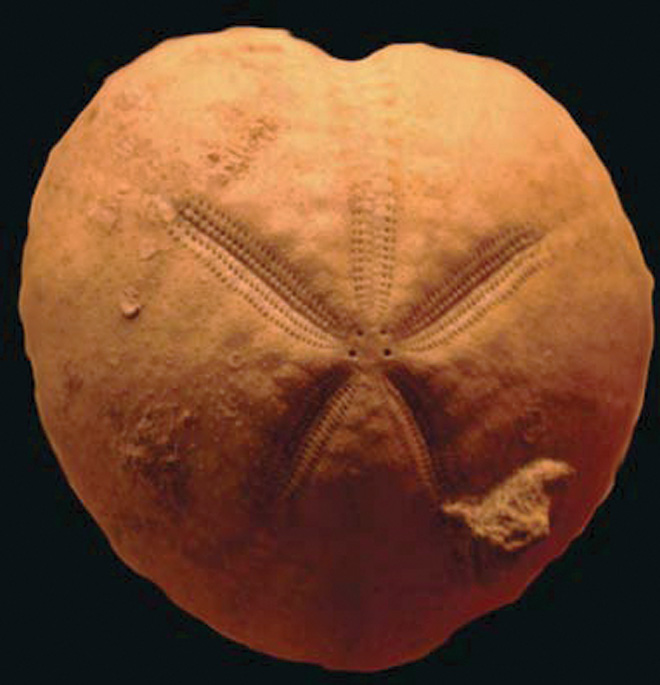
Fossil sea urchin
Fossil sea urchin
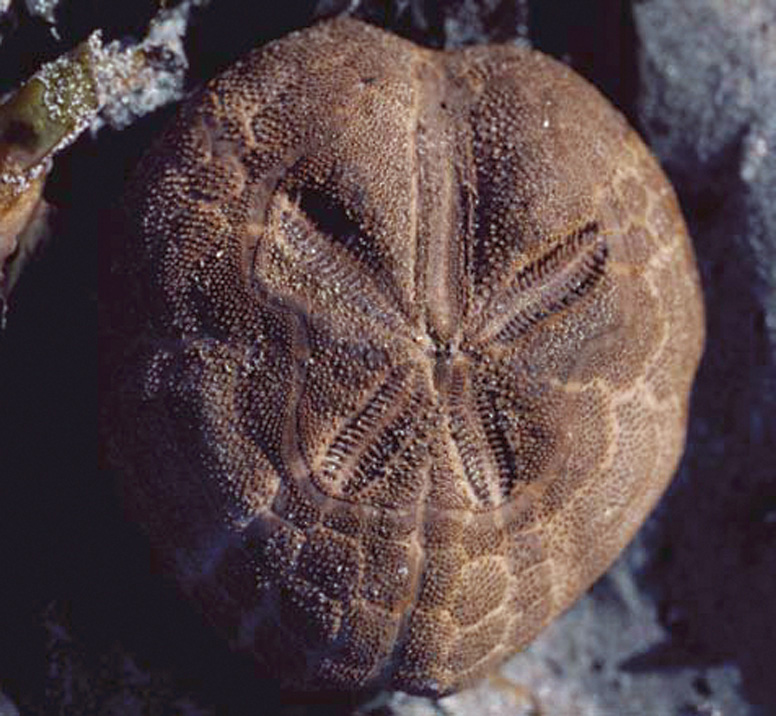
Living sea urchin
Living sea urchin

Were any modern organisms not found?

“I did not find fossils of every organism living today in the dinosaur layers, rather I found representative examples from all of the major animal phyla living today and all of the major plant divisions living today. Taking it one step further, within these bigger groups, I frequently found representatives of all of the major groups or classes within a phylum. For example, for echinoderms (starfish, sea urchins, etc.) I found fossils of all of the major types living today. Same with the insects and the crocodilians, etc. I did not find any large mammals. The largest mammal discovered in a dinosaur layer so far (live size) is 30 pounds (13 kg). Nevertheless, with so many living fossils, both plants and animals, from all of the major phyla and all of the major plant divisions, it points to stasis (lack of change), not evolution. I should also note that if you look at the serious problems with the fossil layer system (the geological column as presented by geologists today), the absence of the bigger mammals can easily be accounted for, but I will save this for a later day.”

Evolutionary story telling ‘unsinkable’?

I asked Dr Werner how evolutionary scientists deal with this evidence, given these remarkable findings. Dr Werner remarked, “If you whole-heartedly believe in a theory, you will always be able to sustain that belief—even in the face of contradictory evidence—by adding a rescue hypothesis to that theory. For example, if a scientist believes in evolution and sees fossils that look like modern organisms at the dinosaur digs, he/she might invent an hypothesis to ‘explain’ living fossils this way:

‘Yes I believe that animals have changed greatly over time (evolution), but some animals and plants were so well adapted to the environment that they did not need to change. So I am not bothered at all by living fossils.’ This added hypothesis says that some animals did not evolve. But if a theory can be so flexible, adding hypotheses that predict the opposite of your main theory, one could never disprove the theory. The theory then becomes unsinkable, and an unsinkable theory is not science.”

Different names for the same animal?

Carl related how evolutionary scientists give fossils different genus and species names from the living forms, creating the illusion of evolution: “Let me give you an example. A scientist found a fossil sea urchin in Cretaceous rock that looks nearly identical to a modern Purple Heart sea urchin, but assigned it to a completely new genus (Holaster). If you saw that creature alive in the ocean you would recognize it as a Purple Heart sea urchin (genus Spatangus). The different name suggests that sea urchins have changed over time, but this is contrived ‘evidence’ for evolution. The fossil looks the same as the living one.” (See photos right).

Evolution disproved?

I asked Dr Werner if his study disproved evolution.

“It is becoming more and more difficult for the evolutionary model to stand in the face of this great number of living fossils. Adding the many other problems with evolution (fossil record, origin of first life, geological layering problems, similarities of non-related animals, etc.), you can declare with confidence that yes, the theory is finished. If a few larger mammals were found in the dinosaur layers, it should be over even for the die-hard believers of evolution, but people tend to go to their grave with the theories they learned in college. A new generation might well look at all of this and ask, ‘What were they thinking?’ ”

Related Articles

Further Reading

References

  1. Sarfati, J., Variation and natural selection versus evolution, Refuting Evolution chapter 2; creation.com/rech2 Return to text.
  2. They were a rodent-like order of mammals, named after their teeth (multiple rows of bumps, or tubercles, on their molars). Return to text.
  3. See Kielan-Jaworowska, Z., Kielan, Cifelli, R.L. and Luo, Z.X., Mammals from the Age of Dinosaurs: Origins, Evolution, and Structure, Columbia University Press, NY, 2004. Return to text.

    Article on the web at http://creation.com/werner-living-fossils

Monday, February 11, 2013

Why Do We Need a Big Picture of the Old Testament? - Creation Today with Jay Seegert


Why Do We Need a Big Picture of the Old Testament?

Paul and Eric welcome back guest Jay Seegert to discuss the importance of connecting the historical “stories” of the Old Testament to Christ’s death on the cross, as well as problems with the Big Bang Theory.

Featured Resources

Friday, February 8, 2013

Biblical Geology 101 - Carl Froede | Creation Superconference 2012


Carl Froede Jr

Biography

Carl has been active in creation geology since 1988. He has a Bachelor of Science in geology from the University of South Alabama and his geological career has encompassed a wide range of activities. These include oil and gas exploration, public health related soil analysis, groundwater aquifer containment, underground waste management, and groundwater modelling. At present he is employed as a professional geologist with the US Government Environmental Protection Agency dealing with geological aspects of waste disposal.

Articles

Wednesday, February 6, 2013

Mythbusting Evolution | Dr. Gary Bates - 2012 Creation Superconference


Revisiting the icons of evolution shows "it's not about science!". Gary Bates busts the myths about evolution.


Gary has been speaking on the creation/evolution issue since 1990. With a background in management and marketing, in 2002, he was invited to join the ministry full-time in Brisbane and eventually became its Head of Ministry. Much in demand for his popular lay talks on creation, Gary and his family relocated to America to serve as CEO of Creation Ministries International-US. He was also elected to the position of CEO of CMI-Worldwide, CMI’s international Federation of ministries.

Once a convinced evolutionist, the Creation message had a dramatic impact on Gary's life. He is now a young-Earth creationist with a heart to communicate this life-changing information to the average ‘person in the street’.

Concerned about the tremendous interest in UFOs and associated extraterrestrial beliefs, Gary undertook specialist research in an attempt to solve this seemingly baffling phenomenon. This led to his Amazon.com top 50 bestseller Alien Intrusion: UFOs and the Evolution Connection (the only Creationist book ever to achieve this feat). This landmark book provides biblical answers to the many puzzling questions regarding UFOs, and whether there is there intelligent, sentient alien life on other planets (our theological position on this is no. Please read the first article below for why). As a leading Christian authority in this area, Gary has travelled extensively around the world, speaking and conducting literally hundreds of interviews on radio, television and various media.

He is married to Frances (an experienced event manager for CMI) and they have four children.

Monday, February 4, 2013

Behemoths Buried Alive - Michael Oard - Creation SuperConference 2012


Billions of dinosaur trackways, burial nests and fossils provide evidence that many dinosaurs were very quickly buried in the worldwide flood of Noah's day.


Michael Oard

Michael Oard became interested in creationism after reading Whitcomb and Morris’s The Genesis Flood in the early 1970s. Having a focus on research, his interest grew to the point that he asked himself what he could contribute. That is when the idea of an Ice Age model started. The first paper on the Ice Age was published in 1979 in the Creation Research Society Quarterly. Since then dozens of articles and about six books have been published on the Ice Age. Research on the Ice Age ignited an interest in glaciology, geology and geophysics, which he has been ardently studying for over 35 years.

Michael has a B.S. and M.S. degree in atmospheric science from the University of Washington. He was a research meteorologist for 6 years at the University of Washington. In 2001, he retired as a lead forecaster with the National Weather Service in Great Falls, Montana. Since then he has been doing full time research in creationist earth science. Over the years, he has learned to speak to lay adults and children on a variety of subjects in the earth sciences.

Image Michael has published eight papers or technical monographs in the secular technical literature of the American Meteorological Association and the National Oceanic and Atmospheric Association. Since becoming a creationist, he has published about 200 articles in the creationist technical literature and has authored, coauthored, or been editor of fourteen published creationist books for different ages on the Flood, the Ice Age, weather, geology, and National park guides. He is on the board of the Creation Research Society.

Michael has been married to Beverly for over 40 years, and they have four grown children with 10 grandchildren. All but the youngest son live close by in Bozeman, Montana.

Back to Who we are: the people involved

Friday, February 1, 2013

Did a Good God make Bad Bugs? - John Mackay


Genetics expert, Dr Csaba Siffel (Center of Disease Control USA) says: This is a wonderful presentation. How do you witness to those who claim: there is a God of love, what about all the nasty diseases?

Did God really invent SARS, Malaria, Cholera, River blindness etc? Darwin and Attenborough claim disease caused them to reject a Creator God. Now you can show people the real history of disease - who and what is really to blame and the only long term solution. Life didn't evolve, so find out where the really nasty bugs did come from. A great tool to witness with and easy to share.


JOHN MACKAY BRIEF BIOGRAPHY
John Mackay is an international speaker and is the Australian Director of Creation Research. He has been lecturing on the subject of origins and doing field research worldwide for the last 30 years.

In March 2005 John debated the UK’s leading theistic evolutionist, Dr John Polkinghorne in a lively clash, hosted by popular BBC commentator Roger Phillips. The entire debate was professionally filmed and adds to the long list of John’s debates against leading evolutionists. During 2004, John was asked to debate 3 New Zealand professors at once. His opposition included Dr David Penny who had just been awarded NZ’s highest science prize in genetics. In the preceding 4 years, John debated such notable opponents as Cambridge geologist Dr Trevor Emmet at the Mumford Lecture Theatre Cambridge, Geology Professor Dr Tim Astin at Reading University and Harvard University Professor Chris Di Carlos at Guelph University, Canada. During January 1999 he was pitted against Dr Eugenie Scott, head of the National Center for Science in the USA.

At a Technical level John has addressed geologists at the Sydney Basin Coal Conference (1984) on the evidence for rapid coal formation and pursued this topic for a poster paper at the International Coal Conference (1985). In 1991, he addressed the Association of Geological and Earth Sciences at Oxford (UK) on the topic ‘The Evidence for Noah’s Flood’. In 1995 he gave a presentation on the same theme to the Tennessee Division of Geology, Tennessee (USA). In 1999 he presented a lecture to the Cambridge University Union (UK) on “The History of Brief Time” - the evidence the world did not evolve over millions of years. His science degree was obtained at the University of Queensland (Australia).

John Mackay was for many years a science teacher in both state and private secondary education systems in Queensland, Australia. He also lectured in Geology at Tertiary level for Technical Education and was instrumental in establishing Creation Research in Australia, and is currently the International Director of Creation Research. His many years in teaching have enabled him to communicate well to all ages.

He has lectured and done research in USA, UK, Europe, Canada, The Caribbean, New Zealand, Australia and Asia on the evidence for Creation and Noah’s Flood. Such experience has given him a practical breadth of knowledge of the overwhelming evidence against evolution. Most of John’s research has been captured on film - you can see it at his talks. Many of his presentations are available on DVD.

John has published many articles and appeared widely on radio, TV and public seminars, in universities, schools and churches throughout the western world. The CEVMA Film Festival 2004 in Hohe Rhön, Germany awarded their top Christian TV award to Creation Research programs. In 1992 John featured regularly in the No. 1 rated TV program “New Horizons” on Channel 7 (Australia) and on Channel 7’s top rating program “Jump Start” in 93/94. He has many times been guest lecturer on the “Origins” TV program which is widely broadcast in the USA. In 93/94 he produced and directed the highly acclaimed TV documentary “The Origin of the Races”, in 95/96 the “Real Roots” documentary, and in 96/97 “Jehovah’s Park” and “Dinosaurs the Rest of the Tail”. His latest Science and Bible DVD (2004), is a Christian’s rebuttal to evolutionist David Attenborough, titled “Did a Good God make Bad Bugs?”. His teaching programs currently appear on TBN and SKY networks in the UK and he has recently featured on the very popular worldwide radio program Science, Scripture and Salvation produced by Institute for Creation Research in California, USA.