This is a MUST-WATCH video on the best evidence for the co-existence of dinosaurs and man, a young earth, and the worldwide flood of Genesis!!
Featuring Dr. Dan Biddle from Genesis Apologetics.
Hosts - Donny (Standing For Truth Ministries) and Sam (Redefine Living).

Featuring scientific and biblical evidence for young earth creation.
Showing posts with label paleontology. Show all posts
Showing posts with label paleontology. Show all posts
Monday, February 12, 2024
Monday, April 14, 2014
Evolutionists Date Rocks & Fossils with Circular Reasoning - Dr. Kent Hovind
Dr. Hovind shows clearly through writings and admissions by evolutionists that the millions of years dating of rocks and fossils is based on circular reasoning. Faulty radiometric dating came along long after the ages for the rock layers and index fossils were set.
This clip is an excerpt from Dr. Hovind's creation science seminar 4, titled Lies in the Textbooks. Watch that entire video here or purchase on DVD.


Friday, February 14, 2014
A REVIEW OF ORIGINAL TISSUE FOSSILS AND THEIR AGE IMPLICATIONS
by Brian Thomas, M.S.
Abstract
The discovery and verification of original soft tissue fossils has caused perhaps the most significant paleontological excitement in recent times. Neither evolutionary nor creationary researchers anticipated these phenomena. Published discoveries of original soft tissues including some of their constituent biochemicals, like collagen, elastin, osteocalcin, hemoglobin decay products, melanin, chitin and chitin-associated protein from fossil pockets around the world are reviewed. Decay rates and longevity studies of some biochemicals estimate an outside age limit for certain original soft tissue remains, and by extension for the geologic strata associated with their fossils. Secular paleontology struggles to interpret organically-derived fossil material with suggestions that various modes of taphonomy altered or sequestered the original organics into recalcitrant products. Investigations and reports of soft tissue fossil finds are cautioned to avoid overstating the case for biblical creation, but the data currently available are more consistent with an earth history spanning thousands, not millions, of years.For Full Text
View Below orIn M. Horstemeyer, ed., 2013, Proceedings of the Seventh International Conference on Creationism, Pittsburgh, PA: Creation Science Fellowship. Visit the ICC at www.creationicc.org.


Wednesday, October 9, 2013
Fossils Fail to Transition from Dinosaur Legs to Bird Wings
by Dr. Elizabeth Mitchell
October 8, 2013
ScienceDaily: How Birds Got Their Wings: Fossil Data Show Scaling of Limbs Altered as Birds Originated from Dinosaurs
How did birds get their wings? This “classic major evolutionary transition” fails to take flight in the fossil record.Evolutionists maintain that birds evolved from dinosaurs but debate just how the transition happened. They are certain it did, of course, because birds exist and, in their view, had to evolve from something. Most evolutionists have maintained that this “classic major evolutionary transition”1 began with the gradual evolution of longer forelimbs among birds’ ancestral dinosaurs. However, careful analysis of the fossil record by McGill University paleontologist Hans Larsson and graduate student Alexander Dececchi, published in the journal Evolution, reveals that there is no such transition evident in the fossil record.
 |
| Archaeopteryx, considered
an early “basal” bird and a transitional species between dinosaurs and birds, like other birds and even some genuinely feathered creaturessuch as the four-winged Microraptor, have proportionally longer forelimbs and shorterhindlimbs than their supposed dinosaur ancestors. The researchers found no trend among dinosaurs to account for this apparent abrupt change in body proportions. Image: H. Raab through www.sciencedaily.com via commons.wikimedia.org |
Abrupt Appearance
Larsson and Dececchi set out to determine from the fossil record when and how dinosaur forelimbs evolved into wings. Instead of finding a gradual lengthening, they found that when proportionate changes associated with different body sizes are factored out, there really is no such trend. The longer forelimbs, shorter hindlimbs, and long metatarsals (foot bones that are so long in birds they look like legs) appear abruptly in the fossil record. The skeletal characteristics of birds, in other words, start when birds start. They have no gradually transitioning antecedents in the rocks.
“This decoupling may be fundamental to the success of birds, the most diverse class of land vertebrates on Earth today. The origin of birds and powered flight is a classic major evolutionary transition,” says Dececchi. “Our findings suggest that the limb lengths of birds had to be dissociated from general body size before they could radiate so successfully. It may be that this fact is what allowed them to become more than just another lineage of maniraptorans [dinosaurs presumed ancestral to birds] and led them to expand to the wide range of limb shapes and sizes present in today's birds.” He adds, “Knowing where birds came from, and how they got to where they are now, is crucial for understanding how the modern world came to look the way it is.”
Evolutionists compare the size, shape, and proportions of body parts in order to track the really big jumps in vertebrate evolution—like fish evolving legs and walking out onto land, mammals de-evolving legs and becoming whales, and of course dinosaurs evolving wings and taking to the air as birds. “Interlimb length ratios are widely used,” the authors write, “to derive evolutionary scenarios.”1
Extrapolating from Nothing
Having “derived evolutionary scenarios,” evolutionists then must explain how these leap...CONTINUE READING
Tuesday, September 17, 2013
Let the Rocks Speak - Philip Bell (updated)
Let the Rocks Speak
Philip Bell

Philip Bell B.Sc. (Hons.), PGCE, CBiol MSB
Creationist Zoologist, ex-Cancer Researcher and Teacher,
CEO, Creation Ministries International (UK/Europe)
Biography
Philip has a passion to demolish secular and anti-God philosophies through sound biblical exposition and Christian apologetics—drawing from his experience in science, research, education and Christian ministry.He trusted in Christ as a child and was raised in a strong Christian home to believe the Bible was the inerrant Word of God. However, during his late teens, he compromised with secular, evolutionary ideas about origins. During the course of his later, graduate studies he rejected evolution/millions of years on both scientific and biblical grounds. He came again to see that the Bible is God’s completely trustworthy, infallible Word on scientific and historical matters—as well as on vital matters of Christian faith and conduct.
Education and Professional background:
Philip studied biology and geology at the University of Wales (Swansea) and obtained a BSc (Hons) degree in zoology. Then he spent nine years in cancer research and became an active member of the Postgraduate School of Medicine at Bath University, England. Following this, he obtained a postgraduate teaching qualification (PGCE) from Exeter University and taught school science (and some religious studies) to 11–18 year olds. He continued to publish occasional cancer research papers (in secular medical journals) until 2004 and is a contributor to Creation magazine, Journal of Creation, CMI’s website and other periodicals.Christian ministry activities:
Since 2001, Philip has traveled throughout the UK, Europe and beyond, teaching and lecturing on Bible/science topics in churches, schools and universities. Up until June 2006, Philip worked for Answers in Genesis in the UK as a speaker/writer and later as Deputy Chief Executive. Currently, he heads up the UK/Europe branch of Creation Ministries International (see creation.com). Philip is married with five children—three grown up and two home-schooled—and is a strong advocate of Christian education.Education
- B.Sc. (Hons.) in Zoology, 1989, University of Wales (Swansea). Subsidiaries in geology and botany.
- P.G.C.E, University of Exeter. Postgraduate Certificate of Education (= Diploma in Education), 1999. Subsidiary course: TEFL (Teaching English as a foreign language).
Awards/Associations
- C. Biol. M.S.B. Elected member of Institute of Biology and awarded Chartered Biologist status, 1995 (reformed as Society of Biology in October 2009).
- Member of the School of Postgraduate Medicine, University of Bath, 1995–1998.
Employment Experience
January 2007–present – CEO, Creation Ministries International (UK/Europe).October 2006–October 2007 – Part-time church worker; regular pastoral and preaching duties in his local church.
2001–2006 – Speaker and writer, later Deputy Chief Executive for Answers in Genesis UK/Europe, Leicester, UK.
1999–2001 – Full time teacher of science (principally biology) in state secondary schools.
1998–1999 – Teacher training
1989–1998 – Clinical scientist involved in cancer, leukaemia and lymphoma research; details below:
Philip gained extensive experience in cell culture techniques, new drug screening, routine light microscopy of all cancers, lymphomas and leukaemias, investigating cytotoxic drug resistance and cellular apoptosis. Some highlights:Postscript: Philip’s long-standing interest in the uses of co-culturing a cancer patient’s normal and malignant cells in order to establish an ex vivo therapeutic index (see tech. abstracts 4 and 9), led to him co-authoring two major papers on this subject in 2002 and 2004 (see tech. secular papers 7 and 8 below), while working full-time as a creationist speaker and writer.
1990–1994—A strong work focus was the research and development of new assay techniques. With a colleague, co-developed a novel in vitro technology to aid in micro-cell culture and cytology (OCTOSPOT; now patented and commercially produced), which was funded by two £100,000 S.M.A.R.T. Awards (1992, 1993) from the UK’s Department of Trade and Industry, (see technical abstracts/conference proceedings 7 & 8 below).
1994–1996—primarily involved in research into chronic lymphocytic leukaemia and clinical drug resistance, involving the writing of papers (see technical secular papers 1–4, below). The significance of this work is shown by the fact that papers 1 and 2 are the major support for one arm of the UK MRC (Medical Research Council) 4th National trial of the treatment of CLL (Chronic Lymphocytic Leukaemia; sponsored by Leukaemia Research Fund)—see references 8 and 9 on page 28 of the protocol: <www.icr.ac.uk/research/research_sections/haemato_oncology/4459.pdf.>
1996–1998—Single-handedly designed and conducted a project on drug-resistance in non-Hodgkin’s lymphoma; this was work towards a PhD (done while working full-time) but finished prematurely when funding was curtailed. Philip subsequently left research and retrained as a school teacher. Nevertheless, the first year’s work towards his PhD led him to author two papers (see tech. secular papers 5 and 6), one of which has become the definitive paper on a particular monoclonal antibody to the B-cell receptor CD79a, for distinguishing blood cells of an aggressive, poor-prognosis lymphoma from the very similar cells of the much more indolent chronic lymphocytic leukaemia—widely cited by all immunobiological suppliers of this antibody worldwide, e.g. http://www.acris-antibodies.com/SM1161F.htm, http://www.millipore.com/catalogue/item/cbl538, http://www.antibodies-online.com/antibody/118795/CD79a FITC Human/, http://www.serotec.co.uk/catalog/datasheet-MCA1298.html, http://www.antikoerper-online.de/antibody/118795/CD79a FITC Human/,
This paper is also referenced in the 7th edition (2005) of the standard text Williams Hematology, Chapter 92: Chronic lymphocytic leukaemia and related diseases. It appears as reference no. 297 here (on p. 1373 of the book):
http://books.google.co.uk/books?id=xk3bkH-84lIC&pg=RA3-PA1373&lpg=RA3-PA1373&dq=bell zl7.4&source=web&ots=6FpJaNK3L1&sig=3Uwl0R0iR4HOTglSRW3vhe2xAzw&hl=en&sa=X&oi=book_result&resnum=3&ct=result
Publications
Technical articles in secular medical/science journals
Book ChapterBosanquet AG & Bell PB. Handling requirements to achieve active drugs in in vitro drug sensitivity and resistance assays. In: Kaspers GJL, Pieters R, Twentyman PR, Weisenthal LM, Veerman AJP (Eds) "Drug resistance in leukemia and lymphoma. The clinical value of laboratory studies." London: Harwood 1993; 227–255.
Papers
- Bosanquet AG & Bell PB. Enhanced ex vivo drug sensitivity testing of chronic lymphocytic leukaemia using refined DiSC assay methodology. Leukemia Research 1996; 20: 143–153.
- Bosanquet AG & Bell PB. Novel ex vivo analysis of nonclassical, pleiotropic drug resistance and collateral sensitivity induced by therapy provides a rationale for treatment strategies in CLL. Blood 1996; 87: 1962–1971.
- Bosanquet AG, Bell PB, Burlton AR, Amos AS. Correlation of bcl-2 with P-glycoprotein expression in chronic lymphocytic leukaemia and other haematological neoplasms but of neither marker with ex vivo chemosensitivity or patient survival. Leukemia and Lymphoma 1996; 24: 141–147.
- Bosanquet AG, Burlton AR, Bell PB, Harris AL. Ex vivo cytotoxic drug evaluation by DiSC assay to expedite identification of clinical targets: results with 8-chloro-cAMP. British Journal of Cancer 1997; 76: 511–518.
- Bell PB, Rooney N, Bosanquet AG. CD79a detected by ZL7.4 separating chronic lymphocytic leukemia from mantle cell lymphoma in leukemic phase. Communications in Clinical Cytometry 1999; 38: 102–105.
- Bosanquet AG, Bell PB, Rooney N. Effect of interleukin-2 on CD95 (Fas/APO-1) expression in fresh chronic lymphocytic leukaemia and mantle cell lymphoma cells: relationship to ex vivo chemoresponse. Anticancer Research 1999; 19: 5329–5334.
- Bosanquet AG, Burlton AR, Bell PB. Parameters affecting the ex vivo cytotoxic drug sensitivity of normal human cells. Journal of Experimental Therapeutics and Oncology 2002; 2: 53–63.
- Bosanquet AG & Bell PB. Ex vivo therapeutic index by drug sensitivity assay using fresh human normal and tumour cells: a potential surrogate for patient toxicity and sensitivity. Journal of Experimental Therapeutics and Oncology 2004; 4: 145–154.
- Bosanquet AG, Boullier BA, Bell PB, Taylor AR, Betteridge RF. Recent developments in the treatment of leukaemias using the Differential Staining Cytoxicity (DiSC) assay. British Journal of Cancer 1991; 63 (Suppl XIII): 31.
- Bosanquet AG, Bell PB, Taylor AR, Chadwick J, Phillips MJ, Johnson SAN. Correlation of clinical response to fludarabine with DiSC assay result. British Journal of Cancer 1991; 64 (Suppl XV): 28.
- Bosanquet AG, Taylor AR, Bell PB. Lack of cross resistance between aclarubicin and other anthracyclines: should choice of anthracyclines be made by DiSC assay? British Journal of Cancer 1992; 65 (Suppl XVI): 29.
- Bosanquet AG & Bell PB. Variable in vitro therapeutic index found by DiSC assay with fresh human tumour cells. Br J Cancer 1992; 66 (Suppl XVII): 19.
- Bosanquet AG, Bell PB, Taylor AR. In vitro DiSC assay results on fresh human cells suggest a trial of amsacrine in chronic lymphocytic leukaemia. Annals of Oncology 1992; 66 (Suppl XVII): 19.
- Bosanquet AG, Burlton AR, Bell PB, Talbot D, Harris AL. The in vitro drug sensitivity of 8-chloro-cAMP in leukemia and lymphoma. Br J Cancer 1994; 69: 1187.
- Bosanquet AG, Bell PB, Burlton AR, Harris AL, Talbot D. New drug screening by DiSC assay. Technical improvements and results with vinorelbine and 8-chloro-cAMP. Annals of Oncology 1994; 5 (Suppl 5): 78.
- Bosanquet AG & Bell PB. New methodology improves the DiSC, MTT and FMC in vitro drug sensitivity assays for determining an individual patient’s drug sensitivity profile. Rev. Invest. Clin. 1994; 272. [see also: Proc. Internat. Soc. Hematol., 1994]
- Bosanquet AG, Bell PB, Burlton AR. In vitro therapeutic index of fresh human tumor and normal cells identified by Differential Staining Cytotoxicity (DiSC) assay. Implications for Phase II/III trials. Proceedings of American Association for Cancer Research 1994; 35:368.
- Bosanquet AG, Mason JM, Drummond MF, Whiteley G, Bell PB, Burlton AR. Effectiveness and cost-effectiveness of DiSC assay directed therapy in chronic lymphocytic leukaemia. British Journal of Haematology 1994; 186 (Suppl 1): 75.
- Bosanquet AG, Amos AS, Bell PB, Burlton AR, Greaves MF. Comparison of BCL-2 and MDR-1 levels in in vitro drug sensitivies by DiSC assay in B-cell and other malignancies. Br. J. Haematol. 1994; 87 (Suppl 1): 83.
- Bosanquet AG, Burlton AR, Bell PB, Pleiotropic drug resistance with collateral sensitivity induced by treatment in CLL is unrelated to classical resistance mechanisms, Eg. MDR, GST, MRP. 2nd International Symposium, Drug Resistance in Leukemia and Lymphoma, 1995.
- Bosanquet AG, Burlton AR, Bell PB. In vitro radioresponse by DiSC assay of malignant cells using a laboratory cell irradiator. Proceedings of the Röntgen Centenary Congress 1995; 456.
- Bosanquet AG, Bell PB, Burlton AR, Whiteley G, Bosanquet MI. Ex vivo drug sensitivity testing aids informed decision making for drug therapy of leukaemia and cancer. Report of: Scientific Basis for Health Services, International Conference, 2–4 October, 1995.
- Bosanquet AG, Burlton AR, Bell PB. Ex vivo activity profile of gamma-linolenic acid and cross-resistance with anthracyclines, antimetabolites, alkylators, steroids, vincristine and radiosensitivity. Proceedings of American Association for Cancer Research 1997; 38:104 (#694).
Creation science articles
Selected Creation magazine articles
- Mudskippers—marvels of the mud-flats! Creation 34(2):48–50, 2012.
- A New Weed Species: Does it prove Creation Wrong? Creation 25(3):27, 2003.
- Evolution Revolution, Creation 25(3):31, 2003.
- Bishop Bell’s Brass Behemoths! Creation 25(4):40–44, 2003.
- Genetic Engineers Unwind Species Barrier. But have they Reversed Evolution? Creation 25(4):52–53, 2003.
- Resurrecting a ‘Prehistoric’ horse, Creation 26(2):46–51, 2004.
- Horse-shoe Crab Meets ET? Creation 26(4):24–25, 2004.
- From Pagan to ‘New Age’ Missionary. Creation 26(4):52–55, 2004.
- The Super-Senses of Oilbirds—Bizarre Birds Elude an Evolutionary Explanation, Creation 28(1):38–41, 2005.
- ‘Evolutionary Stasis’, Double-speak and Propaganda. Creation 28(2):38–40, 2006.
- Surgeon With a Mission: To Make the Evolution Myth Extinct, Creation 29(1):52–55, 2006.
- The tale of the hummingbird and the starling, Creation 31(1):20–21, 2009. (Pre-publication version)
- Of Snakes, Lizards and Mosasaurs—Evolutionists Puzzle over Snake Origins, Creation 31(3):15–17, 2009.
- Snakes: Designed to Kill? Creation 31(4):47, September 2009.
- Expert engineer eschews “evolutionary design”, Creation 32 (1):35-37, January 2010.
- Rock-solid butter! Creation 33(1):40–41, January 2011.
Selected Journal of Creation (formerly Creation Ex Nihilo Technical Journal and TJ) articles

Papers:
Perspectives and other articles:
- Apoptosis: cell ‘death’ reveals Creation, Journal of Creation 16(1):90–102, 2002.
- The Non-evolution of Apoptosis, Journal of Creation 18(1):86–96, 2004.
Book Reviews:
- The Portrayal of Creationists by their Evolutionist Detractors, Journal of Creation 16(2):46–53, 2002.
- Pattern of Programmed Cell Death in Bat Wing Membrane—Support for Evolution? Journal of Creation 21(1):3–4, 2007.
- Evolution for Dummies, Journal of Creation 16(1):36–40, 2002. Review of Why Elephants have Big Ears. Understanding the Patterns of Life on Earth, by Chris Lavers (2001).
- Contentious Fossils, Journal of Creation 17(2):29–33, 2003. Review of Bone of Contention: Is Evolution True? By Sylvia Baker (2003).
- Magnifying Evolutionary Problems, Journal of Creation 18(3):41–45, 2004. Review of Evolution under the Microscope, by David Swift (2002).
- Debunking the Molecules-to-man Myth, Journal of Creation 19(3):45–50, 2005. Review of One Small Speck to Man, by Vij Sodera (2003).
- Atheist with a Mission, Journal of Creation 21(2):28–34, 2007.
- Book review: The magic of reality by Richard Dawkins
Other articles
- Pseudoscience and the stifling of debate
- From fables to truth
- True versus false humility
- Perils of Theistic Evolution
- Skeptic puzzled by ‘Question Evolution’ campaign
- Dawkins gloats over boost to evolutionary dogma in schools
- Freedom from the New Age
- Genetic engineers unwind species barrier
- A Dutch treat
- From frog to prince? … Not all scientists are right!
- Creation commotion in Dutch Parliament
- Still fighting God!
- The humanist apostles’ creed
- Don’t believe evolution—just accept it!
- Homo habilis hacked from the family tree
- Bird behaviour beliefs overturned
- Once upon a time in Northern Ireland
- ‘Walking with Beasts’—Virtually Fact Free
- The BBC TV series Darwin’s Dangerous Idea
- Sickness in the Church!
- Does Creation really matter? Restoring Confidence in the Bible and its Author.
- Battle for Britain: A battle for hearts and minds
- The ‘problem’ of evil and the supremacy of Scripture
- Lying—a survival strategy?
- The problem of evil: pre-Fall animal death?
- ‘Useful idiot’—who, me?
- A high view of Scripture? Second response re: objections from ‘Atheist spat’ article
- I believe what Jesus believed
- Christopher Hitchens: Staring Death in the Face—And the difference that Biblical Creation makes!
- The ‘problem’ of evil and the supremacy of Scripture—Theological gymnastics result in placing ‘science’ as an authority over Scripture
- Evolution and the breakup of Christendom
- Carrying the Creation Torch—An ongoing responsibility
DVDs
- Apemen, ‘Missing Links’ & the Bible, CMI
- Evolution Impossible, CMI
- The Case for Creation, Vij Sodera Production
- Battle for the Mind, CMI
- Design, Death and Suffering, CMI
- Evolutie? Kijk naar de Feiten! (Dutch; Evolution? Face the Facts!)
- Het Belang van Genesis in de Godsdienstige Opvoeding (Dutch; The importance of Genesis in the education of faith), Mediagroep in Genesis.
- Hoe kan ik weten dat God Bestaat? (Dutch; How can I know God exists), MiG.
- Schepping in Zes Letterlijke Dagen? (Dutch; Creation in Six Literal Days?), MiG.
- Science, Scripture & the Importance of Worldview in Education and Using Scientific Discoveries to Open Minds and Build Faith (Dutch slides, English speaking), MiG.
- Waarom de Schepping zo Belangrijk is (Dutch; Why Creation Matters), MiG.
- Walking with Dinosaurs (Dutch slides), MiG.
- Zondvloed, Fossielen & Geloof (Dutch; The Flood, Fossils & Faith), MiG.
Thursday, April 18, 2013
Fossil Man - Dr. Don Patton
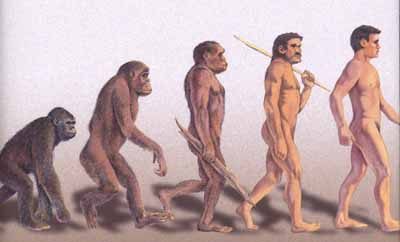 Many students are convinced of evolution by nothing more than charts & illustrations. The order of the line up and brutish restorations reflect more about the prejudices of the restorer than true scientific evidence. What is the actual, up to date evidence? What do we know about Australopithicus, Homo Erectus, Neanderthal and more recent finds? Dr. Patton demonstrates that the fossil record which supposedly indicates the evolution of man actually represents a variety of apes and men, not that different from what we see in the living world. There is nothing in-between but a great deal of imaginative effort and some pithican-spoofus.
Fossil Man
Add to Cart
(Australopithecus, Homo Erectus, Neanderthal, etc.)
DVD - $12 US Each (Plus postage)
| 10 DVD Seminar Set $110 Add to Cart (Plus postage) Individually $12 each Postage view before you buy Buy as a set of 10 or individually (see below) | Buy whole set of 10 DVD's: Add to Cart 10 DVD Seminar Set $60 (Plus postage). Each DVD includes two thirty minute slide-lecture presentations.  1. What is Creation Science 2. Laws Of Science 3. How Old Is The Earth? 4. Record Of The Rocks 5. The Fossil Record 6. Fossil Man 7. Creation Evidence From South America 8. Mystery of Acámbaro 9. Malachite Man 10. Debate On Fossil record |
Tuesday, April 16, 2013
The Fossil Record - Dr. Don Patton
| The Fossil Record Add to Cart (Nature Of Earliest Fossils - Transitional Forms?)  DVD - $12 US Each (Plus postage) | The fossil record is supposed to be the primary documentary evidence for evolution. If there is proof, it would have to be from the fossils. Dr. Patton will examine the evidence, as described by the leading paleontologists themselves, and demonstrate that the supposed proof is very much against evolution. The critical beginning does not show simple, slow, gradual progress. Instead it is sudden, complex and diverse. One by one the supposed links like Archaeopteryx and the American horse series have been "debunked." The imagined progressive continuum from one kind to another is not to be found. There are regular and systematic gaps between the different kinds. See for yourself that the fossil evidence is positive evidence, strongly in favor of the creation. |
Tuesday, March 19, 2013
Apemen - 'Missing Links' & the Bible - Philip Bell
 Ideas and views in science are always shifting, but the ones that stand firm are those that uncannily tie up with what the Bible says.
Many dictionaries class them as fictitious, but Philip Bell states that 'hobbits' (or half-size humans) were real and are confirmed in the fossil record.
But what were these small beings -- human or primate?
Philip Bell digs deep into evolutionist assertions, asking for the scientific evidence that is said to support ape ancestry. In this programme, some evolutionists themselves admit to stretched truths behind widely accepted models of ape to man progression.

Philip Bell
Philip is a scientist and educator who lives and works in the United Kingdom. He studied biology and geology at the University of Wales (Swansea), graduating in zoology in 1989. For nine years he worked at a cancer research unit in chemosensitivity testing. During the 1990s, he was also a member of the Postgraduate School of Medicine, Bath University and (co-)authored a number of papers in secular medical journals (see longer bio for details).Philip became a secondary school science teacher in the late 1990s, but has worked full time in Creation ministry since 2001, speaking on Bible/science topics in churches, schools and universities. Since January 2007, he has been CEO of Creation Ministries International (UK/Europe) and is a contributor to Creation magazine, the Journal of Creation and CMI’s website.
 Philip trusted in Christ as a child and was raised in a strong Christian home to believe the Bible from the very first verse, but compromised with secular beliefs about origins in his late teens. During the course of his later, graduate studies he rejected evolution/millions of years on both scientific and biblical grounds. He came again to see the Bible as God's completely trustworthy, infallible Word on scientific and historical matters—not just matters of Christian faith and conduct. Philip is married with five children—two grown up and three home-schooled—and is a strong advocate of Christian education.
Qualifications
- BSc(Hons) zoology; PGCE; CBiol MSB
Have a look through the additional Creation material available for you at www.god.tv/creation
Wednesday, February 20, 2013
Malachite Man: Man and Dinosaur Co-existed - Dr. Don Patton
From Dr. Patton's website at http://www.bible.ca/tracks/malachite-man.htm:
Official World Site Malachite Man
(Malachite is a green mineral)
(Malachite is a green mineral)
| (Click on photo for high resolution) | 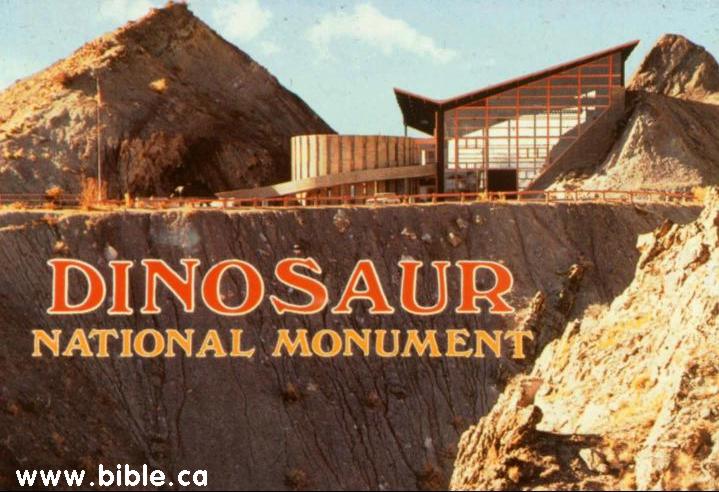 |
The evidence appears obvious that these 10 men, woman and children, were buried rapidly by some catastrophe, like a flood. Articulated skeletons indicate rapid burial. Some propose to explain these bones by arguing that they were mining, when the mine collapsed. However there is no indication of tunnels, and woman and small children would not likely be included in a mining operation.
Additionally, no tools have been found and there are no crushed bones which would be expected if the mine caved in. Another invalid explanation is that this is a mass grave and they were buried. This cannot be true because the living would have to dig a grave 50-100 feet deep through extremely hard sandstone layers. The modern mining operation was halted in the 1970's because the sandstone was so hard it was destroying the bulldozers. These humans appear to have been buried by the same catastrophe that buried dinosaurs in this continent spanning formation. Humans and dinosaurs must have lived at the same time!
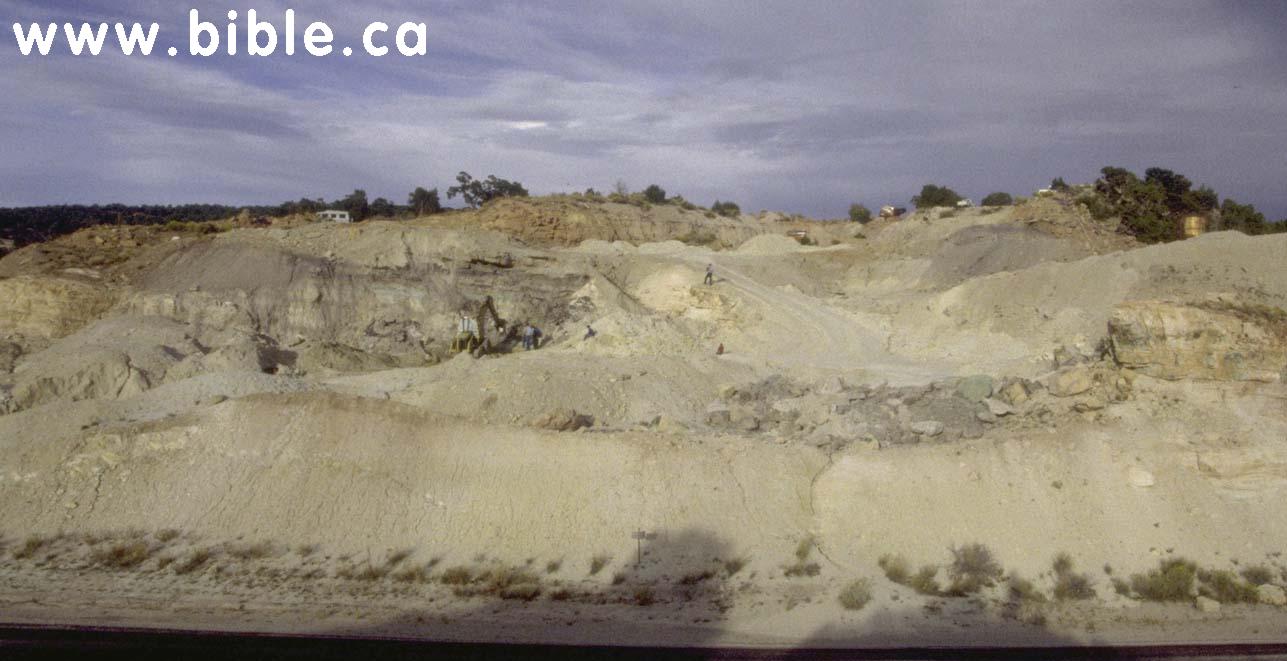 | Panoramic view of the two excavation sites. The location of 1971 excavation site is slightly below center horizontal line and about 1/6th in from the left. The location of the 1990 excavation site is dead center of the photo. (Click on photo for high resolution) |
 | The bull-dozer driver. (Click on photo for high resolution) |
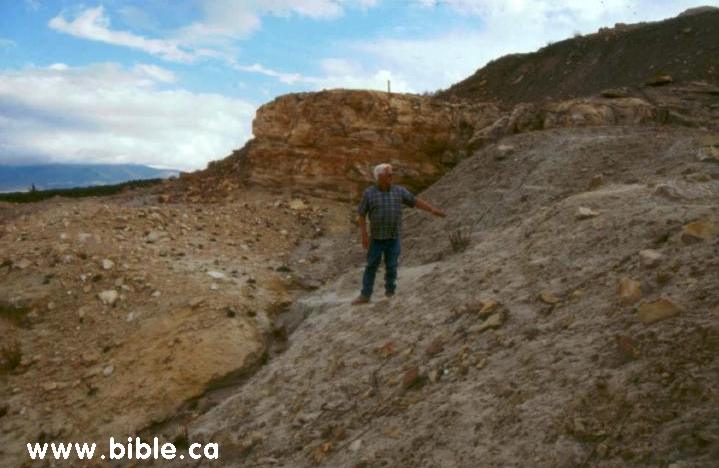 | The bull-dozer driver points out the original location of where he found the first bones of Malachite Man. (Click on photo for high resolution) |
 | Dr. Don Patton holding a human femur which has been replaced with malachite, found at the site. This brilliant green bone had just been excavated by Dr. Patton moments before this photograph was taken. (Click on photo for high resolution) |
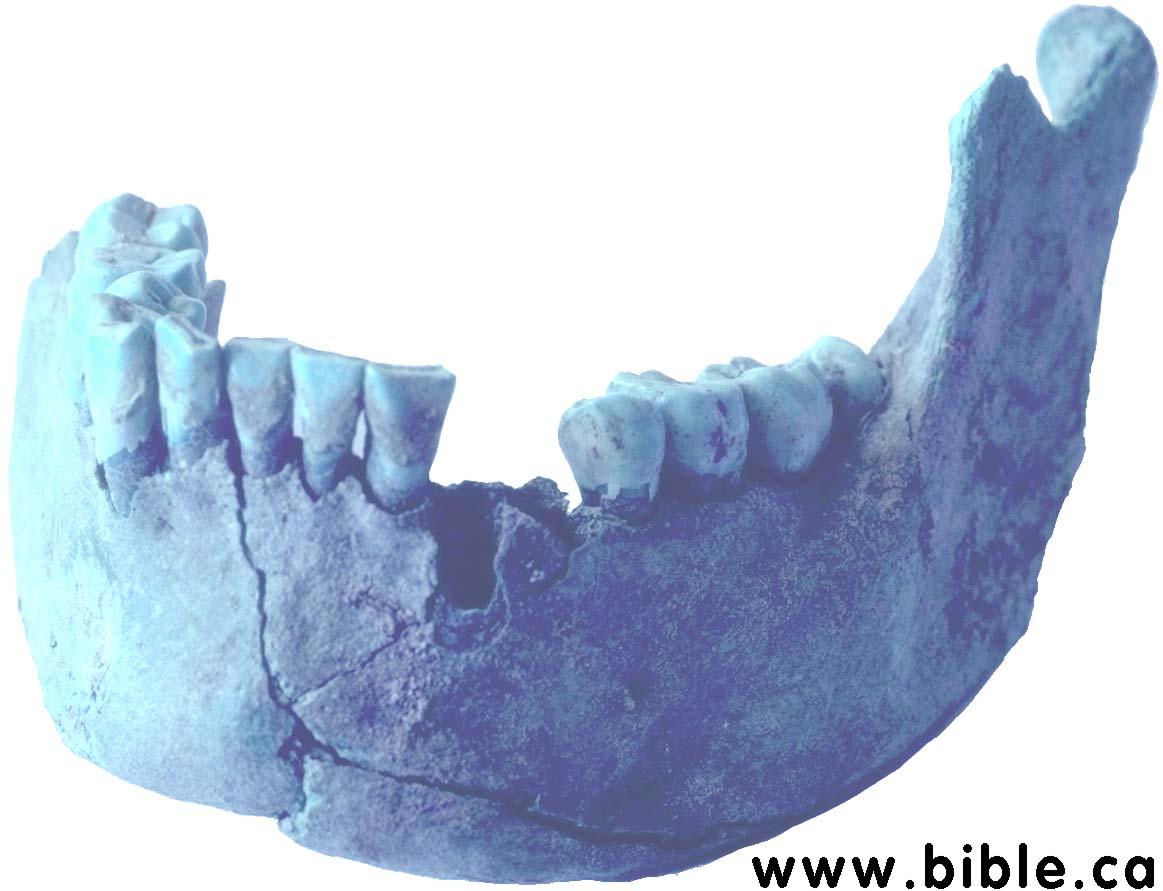 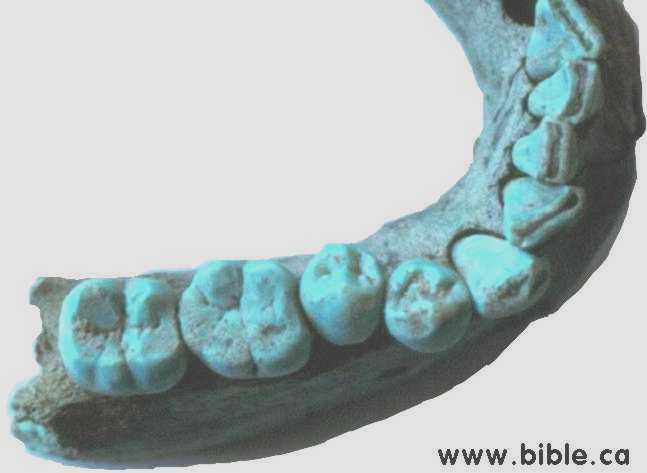 | This perfectly modern human jaw bone and teeth have been completely replaced by turquoise and was found at the site. Note also a top view of the same jaw below, showing detail of the teeth. (Click on either photo for high resolution) |
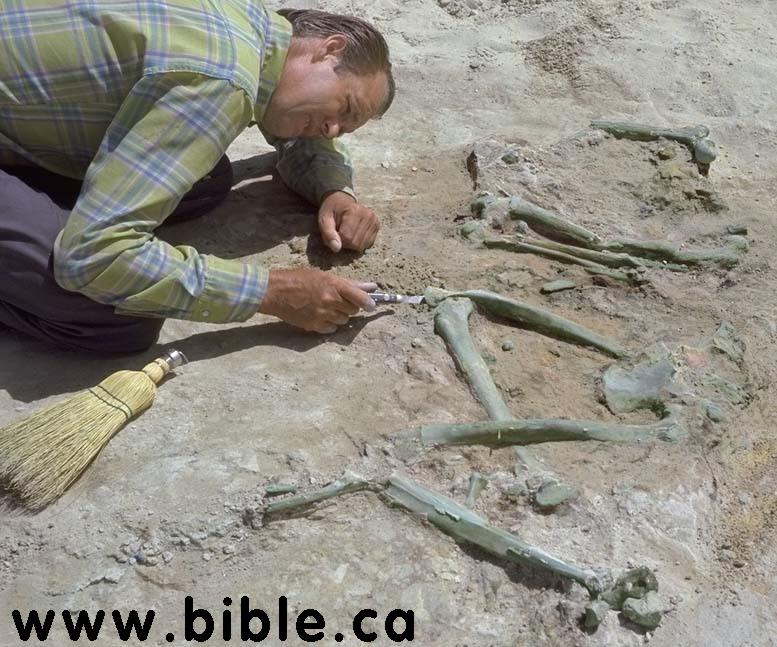 | 1971 Excavation: These bones, from two different individuals, a male and a female, were among the first bones found at the site. (Click on photo for high resolution) |
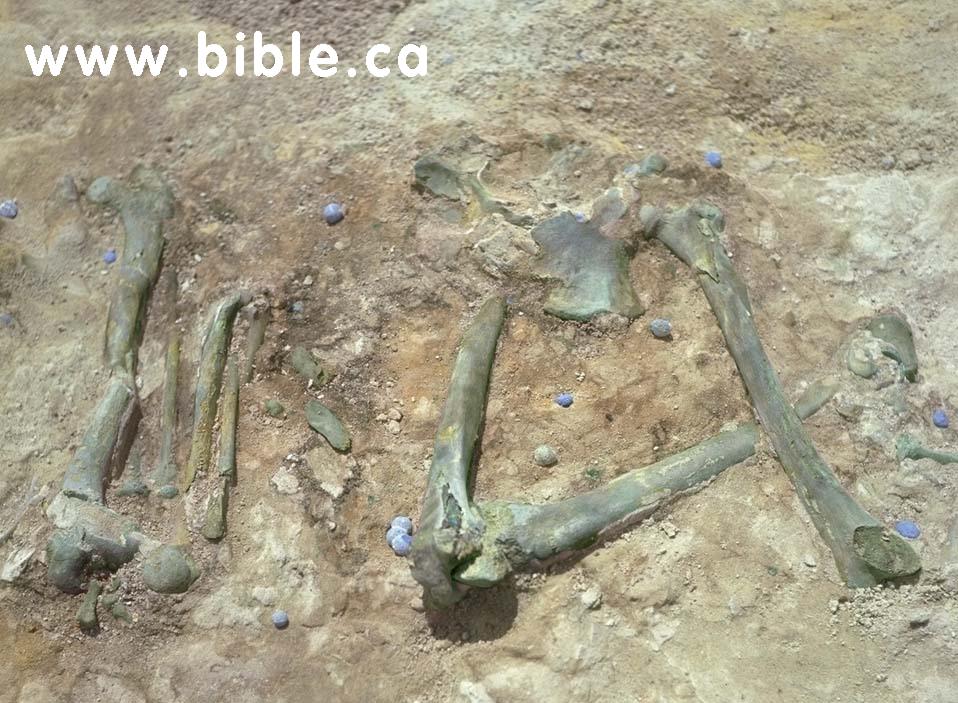 | 1971 Excavation: A close up of these perfectly modern human bones. (Click on photo for high resolution) |
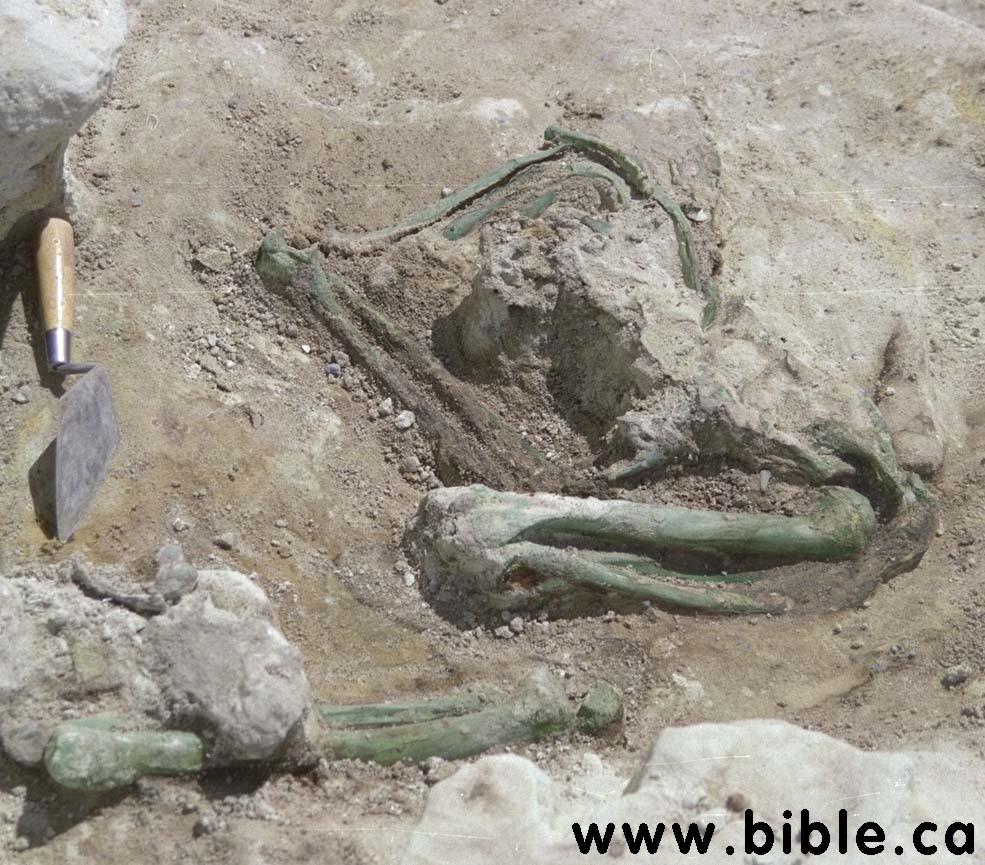 | 1990 Excavation: These human bones appear to be articulated, but are not. They seem to have been washed into place. (Click on photo for high resolution) |
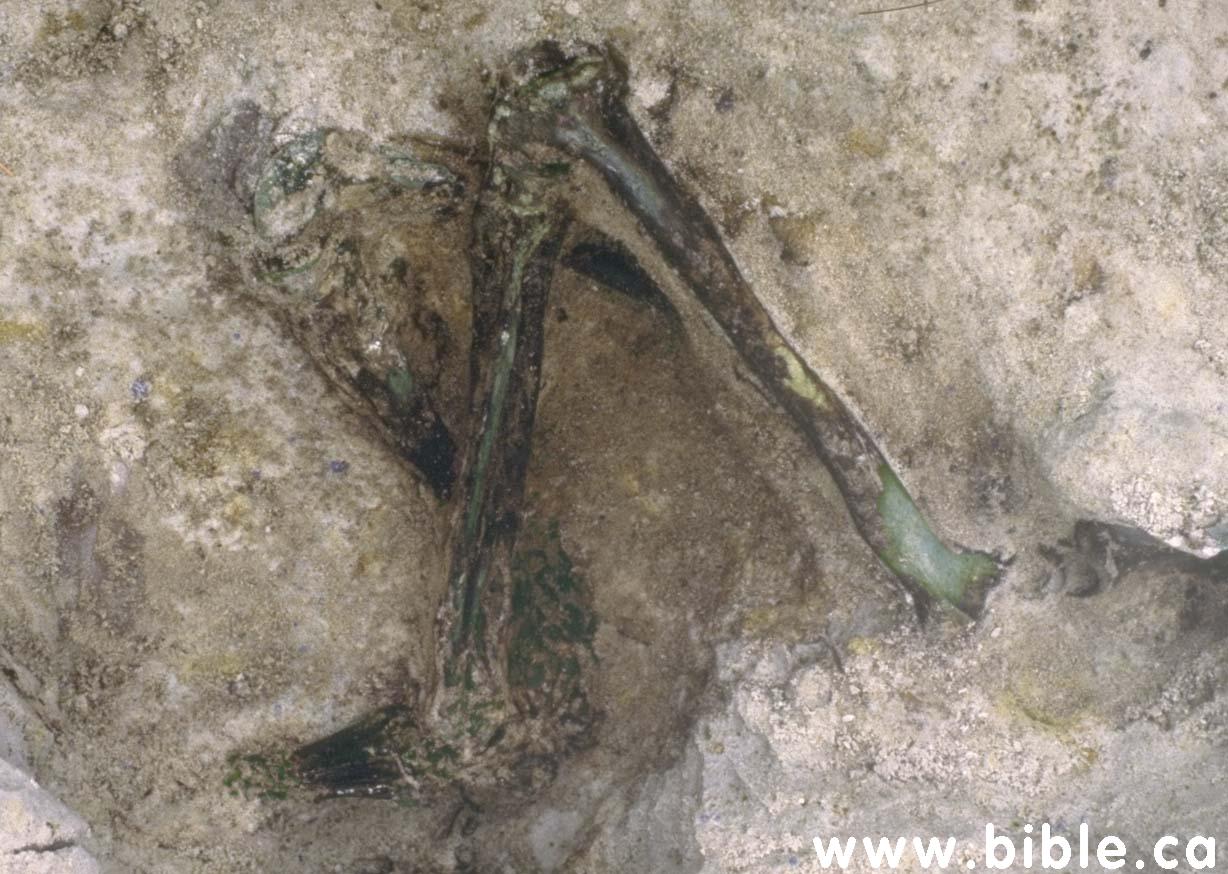 | 1990 Excavation: These modern human bones are perfectly articulated, and include the pelvis, thigh bone, knee, shin bones, as well as a fully articulated delicate angle and foot bones. You can also see the second leg in the back ground still encased in the rock. (Click on photo for high resolution) |


Monday, February 4, 2013
Behemoths Buried Alive - Michael Oard - Creation SuperConference 2012

Billions of dinosaur trackways, burial nests and fossils provide evidence that many dinosaurs were very quickly buried in the worldwide flood of Noah's day.

Michael Oard
Michael Oard became interested in creationism after reading Whitcomb and Morris’s The Genesis Flood in the early 1970s. Having a focus on research, his interest grew to the point that he asked himself what he could contribute. That is when the idea of an Ice Age model started. The first paper on the Ice Age was published in 1979 in the Creation Research Society Quarterly. Since then dozens of articles and about six books have been published on the Ice Age. Research on the Ice Age ignited an interest in glaciology, geology and geophysics, which he has been ardently studying for over 35 years.Michael has a B.S. and M.S. degree in atmospheric science from the University of Washington. He was a research meteorologist for 6 years at the University of Washington. In 2001, he retired as a lead forecaster with the National Weather Service in Great Falls, Montana. Since then he has been doing full time research in creationist earth science. Over the years, he has learned to speak to lay adults and children on a variety of subjects in the earth sciences.
Michael has published eight papers or technical monographs in the secular technical literature of the American Meteorological Association and the National Oceanic and Atmospheric Association. Since becoming a creationist, he has published about 200 articles in the creationist technical literature and has authored, coauthored, or been editor of fourteen published creationist books for different ages on the Flood, the Ice Age, weather, geology, and National park guides. He is on the board of the Creation Research Society.Michael has been married to Beverly for over 40 years, and they have four grown children with 10 grandchildren. All but the youngest son live close by in Bozeman, Montana.
Back to Who we are: the people involved
Subscribe to:
Posts (Atom)