by Dr. Elizabeth Mitchell
October 8, 2013
How did birds get their wings? This “classic major evolutionary transition” fails to take flight in the fossil record.
Evolutionists maintain that birds evolved from dinosaurs but debate
just how the transition happened. They are certain it did, of course,
because birds exist and, in their view, had to evolve from something.
Most evolutionists have maintained that this “classic major evolutionary
transition”
1
began with the gradual evolution of longer forelimbs among birds’
ancestral dinosaurs. However, careful analysis of the fossil record by
McGill University paleontologist Hans Larsson and graduate student
Alexander Dececchi, published in the journal
Evolution, reveals that there is no such transition evident in the fossil record.
 |
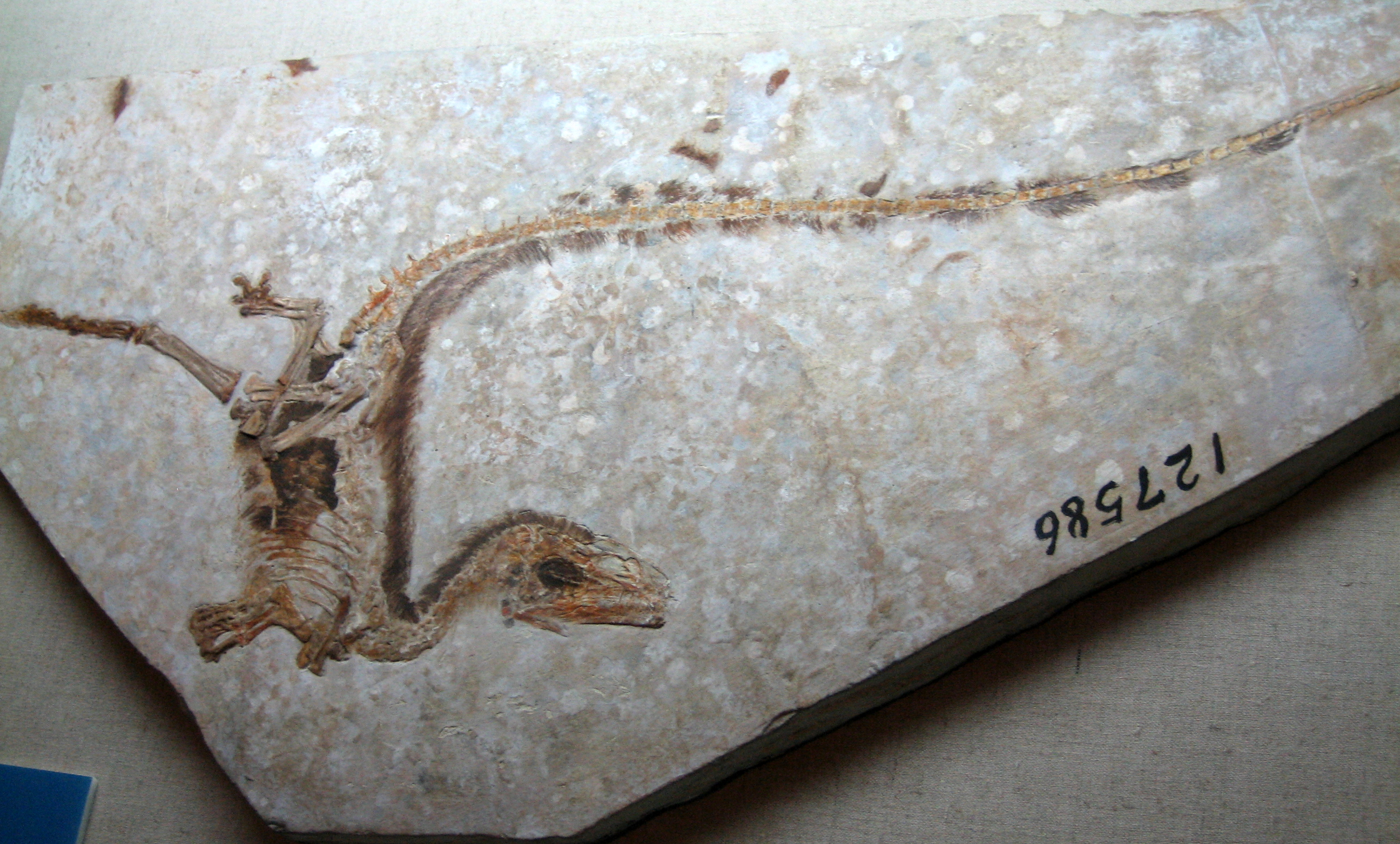
Archaeopteryx, considered
an early “basal” bird and a transitional species
between dinosaurs and
birds, like other birds and even some genuinely
feathered creaturessuch
as the four-winged Microraptor, have
proportionally longer
forelimbs and shorterhindlimbs
than their supposed dinosaur ancestors.
The researchers found
no trend among dinosaurs to account for this
apparent
abrupt change in body proportions.
Image: H. Raab through www.sciencedaily.com
via commons.wikimedia.org |
“Our findings suggest that birds underwent an abrupt change in their
developmental mechanisms, such that their forelimbs and hind limbs
became subject to different length controls,” says Larsson.
1
Abrupt Appearance
Larsson and Dececchi set out to determine from the fossil record
when and how dinosaur forelimbs evolved into wings. Instead of finding a
gradual lengthening, they found that when proportionate changes
associated with different body sizes are factored out, there really is
no such trend. The longer forelimbs, shorter hindlimbs, and long
metatarsals (foot bones that are so long in birds they look like legs)
appear abruptly in the fossil record. The skeletal characteristics of
birds, in other words, start when birds start. They have no gradually
transitioning antecedents in the rocks.
“This decoupling may be fundamental to the success of birds, the
most diverse class of land vertebrates on Earth today. The origin of
birds and powered flight is a classic major evolutionary transition,”
says Dececchi. “Our findings suggest that the limb lengths of birds had
to be dissociated from general body size before they could radiate so
successfully. It may be that this fact is what allowed them to become
more than just another lineage of maniraptorans [dinosaurs presumed
ancestral to birds] and led them to expand to the wide range of limb
shapes and sizes present in today's birds.” He adds, “Knowing where
birds came from, and how they got to where they are now, is crucial for
understanding how the modern world came to look the way it is.”
Evolutionists compare the size, shape, and proportions of body parts
in order to track the really big jumps in vertebrate evolution—like
fish evolving legs and walking out onto land, mammals de-evolving legs
and becoming whales, and of course dinosaurs evolving wings and taking
to the air as birds. “Interlimb length ratios are widely used,” the
authors write, “to derive evolutionary scenarios.”
1
Extrapolating from Nothing
Having “derived evolutionary scenarios,” evolutionists then must explain how these leap...
CONTINUE READING

 4. The scientific evidence supports dinosaurs and birds lived at the same time just as the Bible teaches.

