Showing posts with label Carl Werner. Show all posts

Tuesday, February 12, 2013

Living Fossils - Modern Mammals & Birds with Dinosaurs | Dr. Carl Werner - Creation Superconference 2012


Dr. Werner shows that many MODERN MAMMALS & MODERN BIRD FOSSILS have been found WITH DINOSAUR FOSSILS or in the same layers! We have been lied to by evolutionists who have concealed this fact in an effort to promote their false religion.

Evolution: The Grand Experiment: Vol. 2 - Living Fossils [Hardcover] - Amazon.com

Book Description

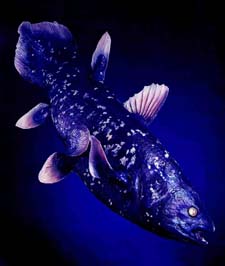
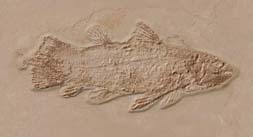
In 1938, the discovery of a large, unusual fish turned the scientific community on end. Dubbed a “living fossil”, the discovery of a coelacanth in South Africa shocked scientists around the world who thought this type of fish had died out millions of years prior during the process of evolution. Today, living fossils are organisms preserved in the fossil record that still exist in similar form today. Their existence challenges the core concepts of evolution and create a fascinating debate among scholars. Do they indicate a younger earth than some have thought, placing the millions-of-years evolutionary timeline into question? Or do living fossils represent a deep mystery? Living Fossils, Vol. 2, Evolution: the Grand Experiment delves into these provocative questions. Includes 700 color images presented in an easy-to-read format. Ideal as a standalone study unit for schools and homeschoolers or easily integrated into existing curricula.

Also available at http://usstore.creation.com/catalog/living-fossils-grand-p-122.html

Also available is Evolution: The Grand Experiment Vol 2 Teacher’s Manual

Format: Hard cover
Audience: High School–Adult
Author: Dr Carl Werner
Pages: 276
Product Code: 10-1-536
How do living fossils impact one of the most controversial debates of our time - creation vs. evolution?
Filled with 700 color photographs and presented in an easy-to-read format.

See www.TheGrandExperiment.com for a great documentary by Dr. Werner about more lies by evolutionary scientists.

Also watch Living Fossils - Dr. Carl Werner, part 1 of 2 | Origins
and Living Fossils - Dr. Carl Werner, part 2 of 2 | Origins

Living fossils: a powerful argument for creation

Don Batten interviews Dr Carl Werner, author of Living Fossils (Evolution: the Grand Experiment vol. 2)

Dr Werner
Dr Werner

Dr Werner graduated from the University of Missouri with distinction in biology (summa cum laude). He received his doctoral degree in medicine at the age of 23 and practices emergency medicine in St Louis.

Dr Werner explained what living fossils are and why he became so interested in them, collecting photographs of these fossils over the last 14 years: “Living fossils are fossilized animals and plants that look similar to modern organisms. I became interested in living fossils as a tool to test evolution.”

“There are basically two models of how life came about: The evolution model suggests that chemicals coalesced and formed a living single-cell almost four billion years ago and then this changed over long periods of time into all other living things. Examples of evolutionary changes include a dinosaur into a bird, or a four-legged land mammal into a whale. The other model, creation, suggests that an external supernatural being (God) created all of the various types of animals and plants at once, and these organisms have changed little over time, other than variations within a basic type.”

Dr Werner’s use of ‘type’ is similar to the biblical use of the word ‘kind’ in Genesis. For example, an animal can change, but only within its kind, such as a wolf into a dog—not radical change such as a four-legged mammal into a whale.1
 
Dr Werner continued, “Living fossils provided me a simple way to test evolution. If evolution did not occur (animals did not change significantly over time) and if all of the animals and plants were created at one time and lived together (humans, dinosaurs, oak trees, roses, cats, wolves, etc), then one should be able to find fossils of at least some modern animals and modern plants alongside dinosaurs in the rock layers. I set out to test this idea without any foreknowledge of any modern organisms in the rock layers. My results (as laid out in the book & video Living Fossils) showed that many modern animals and plants are found with dinosaurs—far more than I ever expected to find.”
Contrary to popular belief, modern types of birds have been found [in ‘dinosaur rock’] including: parrots, owls, penguins, ducks, loons, albatross, cormorants, sandpipers, avocets, etc.
Dr Werner and his wife Debbie travelled over 100,000 miles (160,000 km) and took 60,000 photographs as they filmed the television series Evolution: The Grand Experiment. (Episode 2 of this series, Living Fossils, reveals exactly what they found.) They focused on fossils found in dinosaur rock layers, and compared these fossils to modern animals and plants.
“We looked only at fossils found in the dinosaur dig sites so that scientists who support evolution could not suggest that the fossils we looked at were not ‘old’. All of the fossils we used for comparisons were found in dinosaur rock layers (Triassic, Jurassic and Cretaceous).”

Many modern animals in dinosaur rock!

I asked Carl just how many modern types of animals he had found in the dinosaur rock layers.
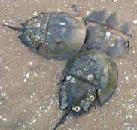
“We found fossilized examples from every major invertebrate animal phylum living today including: arthropods (insects, crustaceans etc.), shellfish, echinoderms (starfish, crinoids, brittle stars, etc.), corals, sponges, and segmented worms (earthworms, marine worms).

“The vertebrates—animals with backbones such as fish, amphibians, reptiles, birds and mammals—show this same pattern.”

Modern fish, amphibians and reptiles

“Cartilaginous fish (sharks and rays), boney fish (such as sturgeon, paddlefish, salmon, herring, flounder and bowfin) and jawless fish (hagfish and lamprey) have been found in the dinosaur layers and they look the same as modern forms.

“Modern-looking frogs and salamanders have been found in dinosaur dig sites.
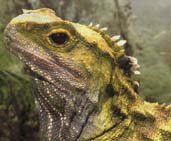
“All of today’s reptile groups have been found in the dinosaur layers and they look the same or similar to modern forms: Snakes (boa constrictor), lizards (ground lizards and gliding lizards), turtles (box turtles, soft-shelled turtles), and crocodilians (alligators, crocodiles and gavials).”

Modern birds

“Contrary to popular belief, modern types of birds have been found, including: parrots, owls, penguins, ducks, loons, albatross, cormorants, sandpipers, avocets, etc. When scientists who support evolution disclosed this information during our TV interviews it appears that they could hardly believe what they were saying on camera.”


Dr William Clemens, UC Berkeley, on modern birds being found in Cretaceous rock. (Clip from Living Fossils DVD)

Mammals

“At the dinosaur dig sites, scientists have found many unusual extinct mammal forms such as the multituberculates2 but they have also found fossilized mammals that look like squirrels, possums, Tasmanian devils, hedgehogs, shrews, beavers, primates, and duck-billed platypus. I don’t know how close these mammals are to the modern forms because I was not able to see most of these, even after going to so many museums.”
Paleontologists have found 432 mammal species in the dinosaur layers; almost as many as the number of dinosaur species. … But where are these fossils? We visited 60 museums but did not see a single complete mammal skeleton from the dinosaur layers displayed at any of these museums. This is amazing.
“Few are aware of the great number of mammal species found with dinosaurs. Paleontologists have found 432 mammal species in the dinosaur layers;3 almost as many as the number of dinosaur species. These include nearly 100 complete mammal skeletons. But where are these fossils? We visited 60 museums but did not see a single complete mammal skeleton from the dinosaur layers displayed at any of these museums. This is amazing. Also, we saw only a few dozen incomplete skeletons/single bones of the 432 mammal species found so far. Why don’t the museums display these mammal fossils and also the bird fossils?”

Many modern plants in dinosaur rock!

“In the dinosaur rock layers, we found fossils from every major plant division living today including: flowering plants, ginkgos, cone trees, moss, vascular mosses, cycads, and ferns. Again, if you look at these fossils and compare them to modern forms, you will quickly conclude that the plants have not changed. Fossil sequoias, magnolias, dogwoods, poplars and redwoods, lily pads, cycads, ferns, horsetails etc. have been found at the dinosaur digs.”
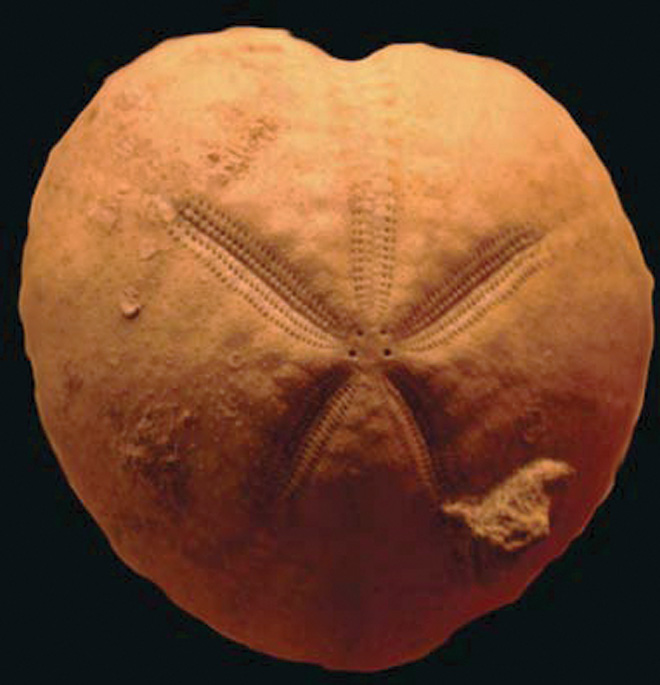
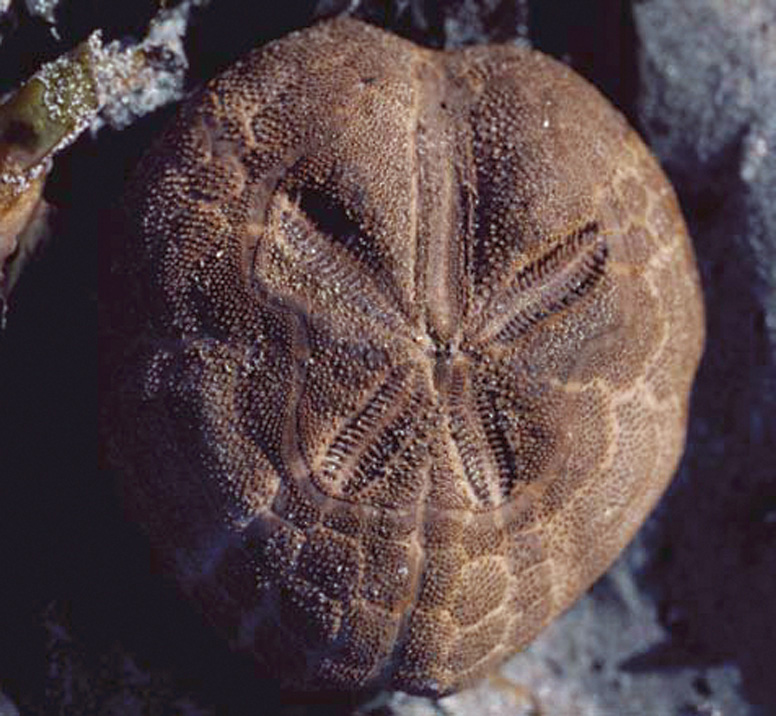
Fossil sea urchin
Fossil sea urchin
Living sea urchin
Living sea urchin

Were any modern organisms not found?

“I did not find fossils of every organism living today in the dinosaur layers, rather I found representative examples from all of the major animal phyla living today and all of the major plant divisions living today. Taking it one step further, within these bigger groups, I frequently found representatives of all of the major groups or classes within a phylum. For example, for echinoderms (starfish, sea urchins, etc.) I found fossils of all of the major types living today. Same with the insects and the crocodilians, etc. I did not find any large mammals. The largest mammal discovered in a dinosaur layer so far (live size) is 30 pounds (13 kg). Nevertheless, with so many living fossils, both plants and animals, from all of the major phyla and all of the major plant divisions, it points to stasis (lack of change), not evolution. I should also note that if you look at the serious problems with the fossil layer system (the geological column as presented by geologists today), the absence of the bigger mammals can easily be accounted for, but I will save this for a later day.”

Evolutionary story telling ‘unsinkable’?

I asked Dr Werner how evolutionary scientists deal with this evidence, given these remarkable findings. Dr Werner remarked, “If you whole-heartedly believe in a theory, you will always be able to sustain that belief—even in the face of contradictory evidence—by adding a rescue hypothesis to that theory. For example, if a scientist believes in evolution and sees fossils that look like modern organisms at the dinosaur digs, he/she might invent an hypothesis to ‘explain’ living fossils this way:

‘Yes I believe that animals have changed greatly over time (evolution), but some animals and plants were so well adapted to the environment that they did not need to change. So I am not bothered at all by living fossils.’ This added hypothesis says that some animals did not evolve. But if a theory can be so flexible, adding hypotheses that predict the opposite of your main theory, one could never disprove the theory. The theory then becomes unsinkable, and an unsinkable theory is not science.”

Different names for the same animal?

Carl related how evolutionary scientists give fossils different genus and species names from the living forms, creating the illusion of evolution: “Let me give you an example. A scientist found a fossil sea urchin in Cretaceous rock that looks nearly identical to a modern Purple Heart sea urchin, but assigned it to a completely new genus (Holaster). If you saw that creature alive in the ocean you would recognize it as a Purple Heart sea urchin (genus Spatangus). The different name suggests that sea urchins have changed over time, but this is contrived ‘evidence’ for evolution. The fossil looks the same as the living one.” (See photos right).

Evolution disproved?

I asked Dr Werner if his study disproved evolution.

“It is becoming more and more difficult for the evolutionary model to stand in the face of this great number of living fossils. Adding the many other problems with evolution (fossil record, origin of first life, geological layering problems, similarities of non-related animals, etc.), you can declare with confidence that yes, the theory is finished. If a few larger mammals were found in the dinosaur layers, it should be over even for the die-hard believers of evolution, but people tend to go to their grave with the theories they learned in college. A new generation might well look at all of this and ask, ‘What were they thinking?’ ”

Related Articles

Further Reading

References

  1. Sarfati, J., Variation and natural selection versus evolution, Refuting Evolution chapter 2; creation.com/rech2 Return to text.
  2. They were a rodent-like order of mammals, named after their teeth (multiple rows of bumps, or tubercles, on their molars). Return to text.
  3. See Kielan-Jaworowska, Z., Kielan, Cifelli, R.L. and Luo, Z.X., Mammals from the Age of Dinosaurs: Origins, Evolution, and Structure, Columbia University Press, NY, 2004. Return to text.

    Article on the web at http://creation.com/werner-living-fossils

Friday, December 14, 2012

Living Fossils - Dr. Carl Werner | Origins

Living Fossils Part 1    Download Show Info PDF


Living Fossils
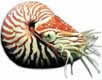
Coelacanth"Living fossils" are plants or animals that closely resemble species known from fossils. Many of those listed below were considered extinct and only known through fossil evidence, but were later discovered to still be alive.
It is presumed by evolutionists that fossils are much older than is correct due to a failure of the scientific community to recognize the occurrence of the Biblical global deluge. Based on an incorrect naturalistic assumption, the stratified layers are believe to have accumulated gradually, and are separated by millions of years.
Animals, such as the dinosaurs, are believed to have gone extinct 65 million years before humans lived on earth. However, according to the Bible and its chronology, all plants and animals were created at the same point in time only a few thousand years ago. Most naturalists find this thought laughable and yet many plants and animals are alive today having changed very little from their relatives that reportedly lived millions of years ago. In fact, most living fossils are almost identical to their fossilized ancestors.

On The Next Origins
Watch as scientists, researchers and authors share relevant facts
and thought-provoking evidence supporting creation.  Join us for Cornerstone TeleVision's unique program entitled, ORIGINS, and
then decide for yourself the truth about your human origins.

Dr. Donn Chappman -Origins TV Host Donn Chapman reminds us,
“It’s God’s view that He created you… and that should be your worldview too!”
These new programs seen on Cornerstone Television Network and our affiliates throughout the world, continue to offer a forum to use scientific evidence to validate the truth of creation.


Living Fossils Part 2       Download Show Info PDF


Living fossils: a powerful argument for creation

Don Batten interviews Dr Carl Werner, author of Living Fossils (Evolution: the Grand Experiment vol. 2)


Dr Werner graduated from the University of Missouri with distinction in biology (summa cum laude). He received his doctoral degree in medicine at the age of 23 and practices emergency medicine in St Louis.
Dr Werner explained what living fossils are and why he became so interested in them, collecting photographs of these fossils over the last 14 years: “Living fossils are fossilized animals and plants that look similar to modern organisms. I became interested in living fossils as a tool to test evolution.”
Dr Werner “There are basically two models of how life came about: The evolution model suggests that chemicals coalesced and formed a living single-cell almost four billion years ago and then this changed over long periods of time into all other living things. Examples of evolutionary changes include a dinosaur into a bird, or a four-legged land mammal into a whale. The other model, creation, suggests that an external supernatural being (God) created all of the various types of animals and plants at once, and these organisms have changed little over time, other than variations within a basic type.”
Dr Werner’s use of ‘type’ is similar to the biblical use of the word ‘kind’ in Genesis. For example, an animal can change, but only within its kind, such as a wolf into a dog—not radical change such as a four-legged mammal into a whale.1
Dr Werner continued, “Living fossils provided me a simple way to test evolution. If evolution did not occur (animals did not change significantly over time) and if all of the animals and plants were created at one time and lived together (humans, dinosaurs, oak trees, roses, cats, wolves, etc), then one should be able to find fossils of at least some modern animals and modern plants alongside dinosaurs in the rock layers. I set out to test this idea without any foreknowledge of any modern organisms in the rock layers. My results (as laid out in the book & video Living Fossils) showed that many modern animals and plants are found with dinosaurs—far more than I ever expected to find.”
Contrary to popular belief, modern types of birds have been found [in ‘dinosaur rock’] including: parrots, owls, penguins, ducks, loons, albatross, cormorants, sandpipers, avocets, etc.
Dr Werner and his wife Debbie travelled over 100,000 miles (160,000 km) and took 60,000 photographs as they filmed the television series Evolution: The Grand Experiment. (Episode 2 of this series, Living Fossils, reveals exactly what they found.) They focused on fossils found in dinosaur rock layers, and compared these fossils to modern animals and plants.
“We looked only at fossils found in the dinosaur dig sites so that scientists who support evolution could not suggest that the fossils we looked at were not ‘old’. All of the fossils we used for comparisons were found in dinosaur rock layers (Triassic, Jurassic and Cretaceous).”

Many modern animals in dinosaur rock!

I asked Carl just how many modern types of animals he had found in the dinosaur rock layers.
“We found fossilized examples from every major invertebrate animal phylum living today including: arthropods (insects, crustaceans etc.), shellfish, echinoderms (starfish, crinoids, brittle stars, etc.), corals, sponges, and segmented worms (earthworms, marine worms).
“The vertebrates—animals with backbones such as fish, amphibians, reptiles, birds and mammals—show this same pattern.”

Modern fish, amphibians and reptiles

“Cartilaginous fish (sharks and rays), boney fish (such as sturgeon, paddlefish, salmon, herring, flounder and bowfin) and jawless fish (hagfish and lamprey) have been found in the dinosaur layers and they look the same as modern forms.
“Modern-looking frogs and salamanders have been found in dinosaur dig sites.
“All of today’s reptile groups have been found in the dinosaur layers and they look the same or similar to modern forms: Snakes (boa constrictor), lizards (ground lizards and gliding lizards), turtles (box turtles, soft-shelled turtles), and crocodilians (alligators, crocodiles and gavials).”

Modern birds

“Contrary to popular belief, modern types of birds have been found, including: parrots, owls, penguins, ducks, loons, albatross, cormorants, sandpipers, avocets, etc. When scientists who support evolution disclosed this information during our TV interviews it appears that they could hardly believe what they were saying on camera.”
Dr William Clemens, UC Berkeley, on modern birds being found in Cretaceous rock. (Clip from Living Fossils DVD)

Mammals

“At the dinosaur dig sites, scientists have found many unusual extinct mammal forms such as the multituberculates2 but they have also found fossilized mammals that look like squirrels, possums, Tasmanian devils, hedgehogs, shrews, beavers, primates, and duck-billed platypus. I don’t know how close these mammals are to the modern forms because I was not able to see most of these, even after going to so many museums.”
Paleontologists have found 432 mammal species in the dinosaur layers; almost as many as the number of dinosaur species. … But where are these fossils? We visited 60 museums but did not see a single complete mammal skeleton from the dinosaur layers displayed at any of these museums. This is amazing.
“Few are aware of the great number of mammal species found with dinosaurs. Paleontologists have found 432 mammal species in the dinosaur layers;3 almost as many as the number of dinosaur species. These include nearly 100 complete mammal skeletons. But where are these fossils? We visited 60 museums but did not see a single complete mammal skeleton from the dinosaur layers displayed at any of these museums. This is amazing. Also, we saw only a few dozen incomplete skeletons/single bones of the 432 mammal species found so far. Why don’t the museums display these mammal fossils and also the bird fossils?”

Many modern plants in dinosaur rock!

“In the dinosaur rock layers, we found fossils from every major plant division living today including: flowering plants, ginkgos, cone trees, moss, vascular mosses, cycads, and ferns. Again, if you look at these fossils and compare them to modern forms, you will quickly conclude that the plants have not changed. Fossil sequoias, magnolias, dogwoods, poplars and redwoods, lily pads, cycads, ferns, horsetails etc. have been found at the dinosaur digs.”
Fossil sea urchin
Fossil sea urchin
Living sea urchin
Living sea urchin

Were any modern organisms not found?

“I did not find fossils of every organism living today in the dinosaur layers, rather I found representative examples from all of the major animal phyla living today and all of the major plant divisions living today. Taking it one step further, within these bigger groups, I frequently found representatives of all of the major groups or classes within a phylum. For example, for echinoderms (starfish, sea urchins, etc.) I found fossils of all of the major types living today. Same with the insects and the crocodilians, etc. I did not find any large mammals. The largest mammal discovered in a dinosaur layer so far (live size) is 30 pounds (13 kg). Nevertheless, with so many living fossils, both plants and animals, from all of the major phyla and all of the major plant divisions, it points to stasis (lack of change), not evolution. I should also note that if you look at the serious problems with the fossil layer system (the geological column as presented by geologists today), the absence of the bigger mammals can easily be accounted for, but I will save this for a later day.”

Evolutionary story telling ‘unsinkable’?

I asked Dr Werner how evolutionary scientists deal with this evidence, given these remarkable findings. Dr Werner remarked, “If you whole-heartedly believe in a theory, you will always be able to sustain that belief—even in the face of contradictory evidence—by adding a rescue hypothesis to that theory. For example, if a scientist believes in evolution and sees fossils that look like modern organisms at the dinosaur digs, he/she might invent an hypothesis to ‘explain’ living fossils this way: ‘Yes I believe that animals have changed greatly over time (evolution), but some animals and plants were so well adapted to the environment that they did not need to change. So I am not bothered at all by living fossils.’ This added hypothesis says that some animals did not evolve. But if a theory can be so flexible, adding hypotheses that predict the opposite of your main theory, one could never disprove the theory. The theory then becomes unsinkable, and an unsinkable theory is not science.”

Different names for the same animal?

Carl related how evolutionary scientists give fossils different genus and species names from the living forms, creating the illusion of evolution: “Let me give you an example. A scientist found a fossil sea urchin in Cretaceous rock that looks nearly identical to a modern Purple Heart sea urchin, but assigned it to a completely new genus (Holaster). If you saw that creature alive in the ocean you would recognize it as a Purple Heart sea urchin (genus Spatangus). The different name suggests that sea urchins have changed over time, but this is contrived ‘evidence’ for evolution. The fossil looks the same as the living one.” (See photos right).

Evolution disproved?

I asked Dr Werner if his study disproved evolution.
“It is becoming more and more difficult for the evolutionary model to stand in the face of this great number of living fossils. Adding the many other problems with evolution (fossil record, origin of first life, geological layering problems, similarities of non-related animals, etc.), you can declare with confidence that yes, the theory is finished. If a few larger mammals were found in the dinosaur layers, it should be over even for the die-hard believers of evolution, but people tend to go to their grave with the theories they learned in college. A new generation might well look at all of this and ask, ‘What were they thinking?’ ”

Related articles

Further reading

References

  1. Sarfati, J., Variation and natural selection versus evolution, Refuting Evolution chapter 2; creation.com/rech2 Return to text.
  2. They were a rodent-like order of mammals, named after their teeth (multiple rows of bumps, or tubercles, on their molars). Return to text.
  3. See Kielan-Jaworowska, Z., Kielan, Cifelli, R.L. and Luo, Z.X., Mammals from the Age of Dinosaurs: Origins, Evolution, and Structure, Columbia University Press, NY, 2004. Return to text.


Living Fossils - Organisms Unchanged After Millions of Years?


Living Fossil Quotes
  • Niles Eldredge, Curator, American Museum Of Natural History, under the heading "Living Fossils", in his book, FOSSILS, 1991.
    • "...there seems to have been almost no change in any part we can compare between the living organism and its fossilized progenitors of the remote geological past. Living fossils embody the theme of evolutionary stability to an extreme degree. ....We have not completely solved the riddle of living to an extreme degree. ....We have not completely solved the riddle of living fossils. " p.101, 108
    • "...were thought to have been extinct by the end of the Middle Devonian [385 MYA]. Modern Neopilina species, however, were dredged from the deep oceans in the 1950's..." p.101
  • P. Arduini and G. Teruzzi cite Neopilina as an example, PREHISTORIC ATLAS, 1982.
    • "There are also numerous organisms, in the present day fauna and flora, which can be regarded as living fossils; one of the best known among them is Neopilina, the only living representative of a class of mollusks...thought to have been extinct for 350 million years before 1957, when Neopilina was caught off the coast of Costa Rica." , p.78
    • "The Gingko biloba is the sole surviving species of a very old group of gymnosperms which died out 100 million years ago." PREHISTORIC ATLAS, 1982, p.78
  • Keith S. Thomson, Ex. Officer, Academy of Natural Sciences. LIVING FOSSIL, 1991
    • "Off the coast of southern Africa, in the winter of 1938, a fishing boat called The Nerine dragged from the Indian Ocean near the Chalumna River a fish thought to be extinct for 70 million years. The fish was a coelacanth, an animal that thrived concurrently with dinosaurs..." From bookcover.
    • "The first members of this group appeared some 424 million years ago in the Silurian and look quite like the modern forms. The last fossils became extinct about 50 million years ago." p.72
    • "This species was widespread and reasonably common in the Pliocene of North America... The tree was thought to be extinct worldwide until living specimens were found in central China in 1945." p.72
  • Sue Rigby, British Geological Survey, Nature Vol.363, p.209, 3/18/93
    • "All paleontologist dream of finding a 'living fossil.' Noel Dilly, it seems has done so... As graptolites are arguably the most important zone fossils of the Lower Palaeozoic (570-360 million years before the present), this is far from an esoteric issue."


Creationist Perspectives


Living Fossil News


Secular Resources
Questionable Living Fossils

Tuesday, November 27, 2012

Whale Evolution vs. The Actual Fossil Evidence


This is a portion of an Origins broadcast, featuring clips from Evolution: The Grand Experiment and an interview with Dr. Carl Werner.


Entire video/book set:
EVOLUTION: THE GRAND EXPERIMENT
thegrandexperiment.com/

Video interview:
Origins - Evolution - The Grand Experiment - Part 1 with Dr. Carl Werner
youtube.com/watch?v=XIqto00mf3w
Origins - Evolution - The Grand Experiment - Part 2 with Dr. Carl Werner
youtube.com/watch?v=Cf9CTrvEeE0
Origins - Evolution - The Grand Experiment - Part 3 with Dr. Carl Werner
youtube.com/watch?v=ZNO3_SorHDM

Not at all like a whale - video
creation.com/creation-magazine-live-episode-57

Whale Tale Two
Excerpt: We think that the most logical interpretation of the Pakicetus fossils are that they represent land-dwelling mammals that didn’t even have teeth or ears in common with modern whales. This actually pulls the whale evolution tree out by the roots. Evolutionists are back to the point of not having any clue as to how land mammals could possibly have evolved into whales.
ridgecrest.ca.us/~do_while/sage/v6i2f.htm

Meet Pakicetus, the Terrestrial Mammal BioLogos Calls a "Whale" - November 2010
evolutionnews.org/2010/11/meet_pakicetus_the_terrestrial039851.html

Ambulocetus (49 million years ago)
Of all the supposed whale transitions, ambulocetus is probably the most well known. It is often depicted as an animal that is adapted to living on land and in the water. Of course, just like pakicetus, the artistic reconstructions of ambulocetus go beyond what the fossil findings justify.
The ambulocetus remains that have been discovered are much more complete than the first findings of pakicetus; however, crucial parts of the animal still have not been discovered. For example, the pelvic girdle has not been found.[7] Without this, there is really no way of telling how the creature moved. This, however, does not stop evolutionists from using artistic manipulations to make ambulocetus look like it is a transitional form.

Very often, popular science journals, such as National Geographic, have depicted ambulocetus as being very transitional-like by giving the creature webbed feet.[8] This is another place where the reader must be able to distinguish between fact and fiction. Soft tissue rarely ever gets preserved, and the ambulocetus remains are no exception. In other words, all we have are the bones. There is no evidence that the creature had webbed feet other than in the imagination of the evolutionists.
trueauthority.com/cvse/whale.htm

As for 'vestigial legs'; It turns out the 'vestigial legs' are really very functional pelvic bones instead:
An Email Exchange Regarding "Vestigial Legs" Pelvic Bones in Whales by Jim Pamplin
Excerpt: The pelvic bones (supposed Vestigial Legs) of whales serve as attachments for the musculature associated with the penis in males and its homologue, the clitoris, in females. The muscle involved is known as the ischiocavernosus and is quite a powerful muscle in males. It serves as a retractor muscle for the penis in copulation and probably provides the base for lateral movements of the penis. The mechanisms of penile motion are not well understood in whales. The penis seems to be capable of a lot of independent motion, much like the trunk of an elephant. How much of this is mediated by the ischiocavernosus is not known.
In females the anatomical parts are smaller and more diffuse. I would imagine that there is something homologous to the perineal muscles in man and tetrapods, which affect the entire pelvic area - the clitoris, vagina and anus.

The pelvic rudiments also serve as origins for the ischiocaudalis muscle, which is a ventral muscle that inserts on the tips of the chevron bones of the spinal column and acts to flex the tail in normal locomotion.
darwinisdead.com/an_email_exchange_regarding.htm

The time for the supposed transition of whales, from some four legged creature, has now been dramatically shortened;

A Whale of a Problem for Evolution: Ancient Whale Jawbone Found in Antartica - JonathanM - October 2011
Excerpt: Argentine paleontologist Marcelo Reguero said the fossilized archaeocete jawbone found in February dates back 49 million years. In evolutionary terms, that’s not far off from the fossils of even older proto-whales from 53 million years ago that have been found,,,
uncommondescent.com/intelligent-design/a-whale-of-a-problem-for-evolution-ancient-whale-jawbone-found-in-antartica/

Discovery of "Oldest Fully Aquatic Whale" Fossil Throws a Major Bone into Whale Evolution Story - Casey Luskin - October 18, 2011
Excerpt: In fact, if this find has been correctly identified, then fully aquatic whales might have existed before many of their alleged semi-aquatic evolutionary precursors.
evolutionnews.org/2011/10/discovery_of_oldest_fully_aqua052021.html

Whales: New "Icon of Evolution" or a Challenge to Darwinian Theory? - podcast
intelligentdesign.podomatic.com/entry/2011-12-02T13_36_08-08_00

"Whales have a long generation time, and they don't have huge populations. They're like the worst-case scenario for trying to evolve structures rapidly," "To fix all the mutations needed to convert a little land mammal into a fully functional whale [in ten million years]--mathematically that's totally not possible." Casey Luskin
evolutionnews.org/2009/11/6_bones_of_contention_with_nat.html#more

Whale Evolution? Darwinist 'Trawlers' Have Every Reason To Be Concerned:
Excerpt: As one review noted: "The anatomical structure, biological function, and way of life of whales are so distinctly different from those of terrestrial mammals that they cannot possibly have evolved from the latter by small genetic changes; aquatics require the simultaneous presence of all their complex features to survive."
arn.org/blogs/index.php/2/2009/12/29/whale_evolution_darwinist_trawlers_have

It seems the entire argument for inferring the supposed fossil sequence for whale evolution, in the fossil record, is primarily based on the erroneous readings of 'bone homology', or bone similarity, between different species. Yet this entire line of reasoning, for establishing scientific certainty for any proposed evolutionary sequence of fossils, is anything but 'certain', as this following video and quote clearly point out:

Investigating Evolution: Homology - video
youtube.com/watch?v=XgXT9sU6y18

“To take a line of fossils and claim that they represent a lineage is not a scientific hypothesis that can be tested, but an assertion that carries the same validity as a bedtime story, amusing, perhaps even instructive, but not scientific.”

Evolutionist - Henry Gee, editor of Nature, on the feasibility of reconstructing phylogenetic trees from fossils

Here is a cool animated video showing a sperm whale using 'designed' echolocation to hunt a giant squid:

Sperm whale Vs giant squid - video
youtube.com/watch?v=_z2Lfxpi710

Moreover, identical forms of echolocation show up in widely divergent species from whales. This finding is unexpected from an evolutionary perspective, yet this finding is exactly what we would expect to find from presupposing a Creator to reuse optimal designs:
Convergence Drives Evolution Batty - Fazale Rana - September 2010

Excerpt: The multiple, independent origin of echolocation in these animals (twice in bats and once in toothed whales) exemplifies convergence,,, When examined from an evolutionary perspective, convergence doesn’t make much sense.,,, the latest research demonstrates that—again, from an evolutionary perspective—the genetic and biochemical changes that account for the emergence of echolocation in bats and dolphins is identical. Given the random nature of the evolutionary process, this recent discovery doesn’t match what evolutionary biologists would expect to find. But both the discovery and convergence make sense if life stems from the work of a Creator.
reasons.org/convergence-drives-evolution-batty

Common Design in Bat and Whale Echolocation Genes? - January 2011
Excerpt: two new studies in the January 26th issue of Current Biology, a Cell Press publication, show that bats' and whales' remarkable ability and the high-frequency hearing it depends on are shared at a much deeper level than anyone would have anticipated -- all the way down to the molecular level.
evolutionnews.org/2011/01/common_design_in_bat_and_whale042291.html

Bat and Whale Echolocation Genes Point to Common Design - February 2011 - Podcast
intelligentdesign.podomatic.com/entry/2011-02-21T10_59_16-08_00

The bionic antinomy of Darwinism
Excerpt: For example, the bats have an echometer emitting 100 kHz supersonic pulses at a frequency of 30 times per second. These waves are reflected and distorted by the surrounding objects and their echoes are intercepted and elaborated by the bat to catch its prey and also just to get around. The signal processing of these echoes is so accurate to allow bats to fly, twisting, looping and zig-zagging through the air, into a completely dark room intersected by tens pianoforte strings without grazing them. The bat’s echometer has more accuracy, more efficiency, less power consumption and less size than any artificial sonar constructed by engineers.
uncommondescent.com/biology/the-bionic-antinomy-of-darwinism/

A comparison of signal detection between an echolocating dolphin and an optimal receiver - 1989
Excerpt: The results of experiment II indicated that the dolphin required approximately 7.4 dB higherE e /N than an optimal detector to detect the phantom target.
profiles.wizfolio.com/loisdankiewicz/publications/2260/27414/

A false killer whale adjusts its hearing when it echolocates.- 2008
Excerpt: the animal has an active 'automatic gain control' mechanism in her hearing based on both forward masking that balances outgoing pulse intensity and time between pulse and echo, and active hearing control.
ncbi.nlm.nih.gov/pubmed/18490386

This following videos and articles take a honest look at just what Darwinian evolutionists are up against to satisfactorily explain supposed whale evolution from a scientific point of view:

Whale Evolution Vs. Population Genetics - Richard Sternberg PhD. in Evolutionary Biology - video
metacafe.com/watch/4165203


“That molecular evidence typically squares with morphological patterns is a view held by many biologists, but interestingly, by relatively few systematists. Most of the latter know that the two lines of evidence may often be incongruent."

(Masami Hasegawa, Jun Adachi, Michel C. Milinkovitch, "Novel Phylogeny of Whales Supported by Total Molecular Evidence," Journal of Molecular Evolution, Vol. 44, pgs. S117-S120)
What Does It take To Change A Cow Into A Whale - David Berlinski - video
youtube.com/watch?v=DRqdvhL3pgM

How to Become a Whale - David Klinghoffer - August 2011
evolutionnews.org/2011/08/post_28049671.html

"Whales have a long generation time, and they don't have huge populations. They're like the worst-case scenario for trying to evolve structures rapidly," "To fix all the mutations needed to convert a little land mammal into a fully functional whale [in ten million years]--mathematically that's totally not possible." Casey Luskin
evolutionnews.org/2009/11/6_bones_of_contention_with_nat.html#more

Whale Evolution? Darwinist 'Trawlers' Have Every Reason To Be Concerned:
Excerpt: As one review noted: "The anatomical structure, biological function, and way of life of whales are so distinctly different from those of terrestrial mammals that they cannot possibly have evolved from the latter by small genetic changes; aquatics require the simultaneous presence of all their complex features to survive."
arn.org/blogs/index.php/2/2009/12/29/whale_evolution_darwinist_trawlers_have

When is a Whale a Whale? by Duane Gish, Ph.D.
G. A. Mchedlidze, a Russian expert on whales, while maintaining that Archeoceti occupy an intermediate position between terrestrial mammals and typical Cetacea, states that the problem of the phylogenedc relationship between Archeoceti and modern Cetacea is a highly controversial issue. He reports that a number of authors consider that the Archeoceti are a completely isolated group having nothing in common with typical Cetacean.[9] If this opinion is correct, then the archeocetes, supposedly archaic whales, were not whales at all and did not give rise to whales (cetaceans).
A search of texts on mammals for fossils of creatures resembling Ambulocetus failed to produce one closely resembling Ambulocetus, although Allodesmus, an extinct aquatic carnivore believed to have preceded walruses, bears some resemblance.[10]

Perhaps we should not be surprised that Thewissen and coworkers would dare to call Ambulocetus a "whale" when we note the fact that Robert Carroll, in his voluminous tome, Vertebrate Paleontology and Evolution, made the incredible statement that "Despite the extreme difference in habitue, it is logical from the standpoint of phylogenetic classification to include the mesonychids among the Cetaceans."[11] Incredible, indeed! The mesonychids were wolf-like, hoofed carnivores that, as far as anyone knows, never went near the water. Carroll states, "Mesonyx was the size and proportions of a wolf and, perhaps, had a similar way of life."[12] Carroll and others believe that the skull shape and the dentition of what they think were early whales resembled mesonychids. They therefore have adopted the mesonychids as the land mammal from which whales evolved. Now Carroll suggests we place the mesonychids in the Cetacea. Presto! These wolf-like animals are now whales! Who says evolutionists have no transitional forms?

Conclusion
What may we conclude from all of this? Most evolutionists, certain that whales and other aquatic mammals must have evolved from land mammals, would stretch their imagination to whatever extent necessary to declare that Ambulocetus, a creature with powerful forelimbs and hind limbs (the latter bearing hooves), unable to dive to any significant depth or to hear directionally under water, was nevertheless, a whale. On the other hand, not biased by any such presupposition, we conclude that, first of all, it is ridiculous to call the creature a whale, and secondly, that it was certainly not an intermediate between a land mammal and a whale, but was more likely a near-shore carnivore whose exact behavior and habitue is as yet a topic only for speculation.

When we consider these profound proclamations by evolutionists we should bear in mind that they were equally convinced when they suggested human evolutionary ancestors, such as Ramapithecus, now recognized to be essentially the same as a modern orangutan; Piltdown Man, a fraud that was nothing more than the jawbone of a modern ape and a human skull; Nebraska Man, that turned out to be a pig's tooth; and Neanderthal Man, a supposed primitive subhuman that is now recognized by most paleoanthropologists as fully human, Homo sapiens, who suffered from pathological conditions, such as arthritis and rickets, a vitamin D deficiency. If evolutionists can get an evolutionary ancestor of man from nothing more than a pig's tooth, it should be no challenge to get a whale from a creature that walked on land.
icr.org/article/when-whale-whale/

Robert Carroll, a highly regarded evolutionist and an expert in vertebrate paleontology, admits as follows: "It is not possible to identify a sequence of mesonychids leading directly to whales." (Robert L. Carroll, Patterns and Processes of Vertebrate Evolution, Cambridge University Press, 1998, p. 329.) (OF Note; a few sentences later he directly contradicts this honest statement)

further notes:
Cambrian Explosion thru Refutation Of Human Evolution
lettherebelight-77.blogspot.com/2010/08/corrected-link.html